
Certified Pre-Owned Vehicle Inspection Checklist: What to Cover
, 9 min read
- used car inspection points
- vehicle inspection before buying
- autoshed approved standard
- pre-purchase car check
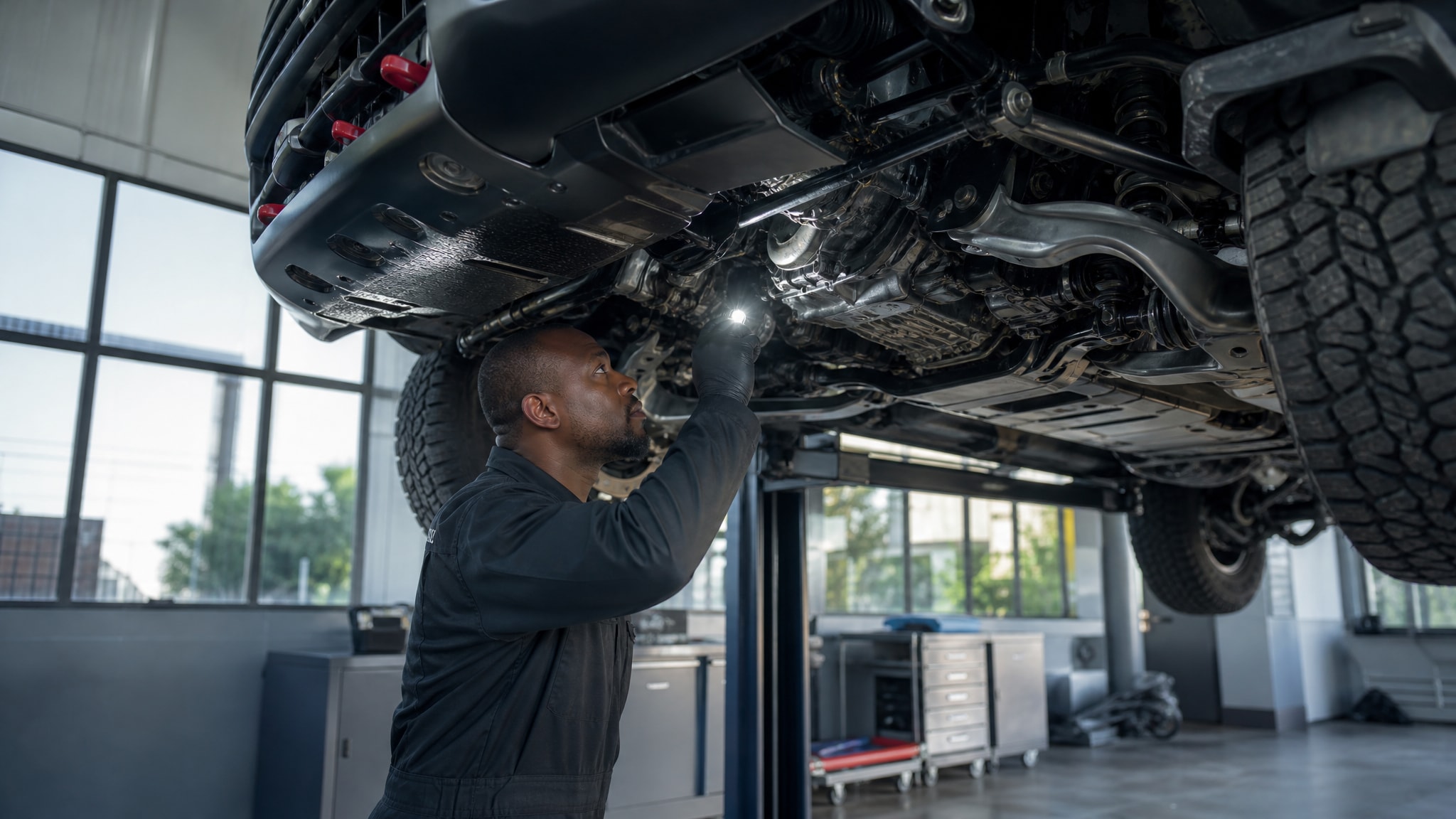
Buying a premium used vehicle in South Africa takes more than a cursory glance and a hopeful test drive. Private sellers and general dealers often rely on basic roadworthy tests to satisfy legal requirements. Compliance isn't quality, and it isn't a promise of long-term reliability. A proper certified pre-owned inspection checklist has to go well beyond the minimum statutory standards, covering the mechanical, electronic and cosmetic integrity that defines luxury ownership.
We built the Autoshed Approved standard because generic assessments don't address the realities of modern premium bakkies and executive cars. If a vehicle isn't good enough for our family, it isn't good enough for yours, and that's the thinking behind our rejection and reconditioning criteria. It's also why over 70% of our business comes from repeat customers and referrals. People come back because they trust how we inspect and prepare a vehicle, not because of a one-off sale.
Why Generic Checklists Fall Short for Premium Vehicles
Standard pre-purchase checks focus on immediate safety hazards and legal compliance. That leaves real gaps in assessing long-term value and refinement. You deserve assurance that goes beyond whether a vehicle can legally be driven off the forecourt today.
The difference between roadworthy and retail-ready
A roadworthy certificate confirms that brakes function, lights work and tyres have enough tread at the moment of testing. It doesn't tell you whether the transmission shifts smoothly under load, whether the adaptive suspension damps properly, or whether the infotainment system has intermittent faults. Retail-ready certification means evaluating the components that affect daily satisfaction and future resale value, not just the ones traffic law cares about.
This matters most in luxury vehicles, where repair costs escalate quickly and owners expect more as a matter of course. Our team brings over 28 years of combined motor industry experience to every vehicle assessment and reconditioning decision, so we catch issues that basic inspections miss entirely.
Mechanical Integrity: Beyond Basic Engine Checks
Engine compression tests and oil analysis are only the foundation of a proper mechanical evaluation for premium vehicles. Modern powertrains integrate complex systems that need specialised diagnostics and experienced interpretation.
Transmission and drivetrain assessment
Automatic transmissions in luxury SUVs and performance saloons need more scrutiny than a fluid check and a glance for leaks. Technicians evaluate shift quality across every gear, monitor torque converter lockup, and scan for stored fault codes that signal a problem before it becomes a failure. Premium bakkies like the Ford Ranger and Toyota Fortuner need specialised drivetrain and suspension checks beyond what a standard passenger vehicle inspection covers, which matters particularly when comparing premium bakkie models for demanding dual-purpose use.
Transfer case operation and differential health get the same attention. Wear patterns here often reveal previous abuse or neglected maintenance, the kind that turns into an expensive repair within months of purchase.
Suspension and steering precision
Adaptive air suspension and electronically controlled dampers are some of the most sophisticated mechanical components in a modern luxury vehicle. A physical inspection alone can't confirm whether sensors calibrate correctly, whether compressors hold adequate pressure, or whether control modules talk properly to the stability systems. Steering racks and tie rods get checked for play that might sit within manufacturer spec but still produce vague feedback, which has no place in a premium driving experience.
Bushings and mounting points wear gradually, creating noise and imprecision that basic inspections miss until they fail completely. We replace these wear items before they reach that point, so the vehicle drives as intended rather than just functioning adequately.
Braking system performance under load
Brake pad thickness and disc runout checks satisfy roadworthy requirements, but that's only part of the story for vehicles with advanced braking systems. Electronic brake force distribution, regenerative braking integration in hybrids, and emergency assist functions all need diagnostic verification. We test brake fluid moisture content and ABS sensor function too, because degraded fluid or a faulty sensor compromises the safety system exactly when you need it most.
Performance under repeated heavy braking reveals master cylinder health and caliper condition that a static inspection can't expose. This kind of dynamic testing is what tells us your vehicle stops confidently in real-world conditions, not just during a gentle demonstration drive.
Electronic Systems and Software Diagnostics
A modern luxury vehicle contains dozens of interconnected control modules governing everything from engine management to seat position memory. Physical inspection can't reveal software corruption, failed communication between modules, or outdated firmware affecting functionality and safety.
Infotainment and connectivity verification
Touchscreen responsiveness, Bluetooth pairing, navigation accuracy and smartphone integration all need hands-on testing before a vehicle goes up for sale. Intermittent faults in these systems frustrate owners daily and chip away at the premium experience, yet they rarely trigger a warning light or show up in a standard diagnostic scan. USB ports, wireless charging pads and audio output each get checked individually, because partial functionality isn't acceptable in a luxury vehicle.
Software updates can resolve known issues or unlock features a previous owner never activated. We check current firmware versions and apply available updates during reconditioning, so you get the full capability the manufacturer intended.
Safety sensor calibration and ADAS testing
Advanced driver assistance systems depend on precise alignment between cameras, radar units and ultrasonic sensors mounted around the vehicle. A windscreen replacement, minor body repair or even prolonged vibration can knock these sensors out of alignment enough to compromise lane departure warnings, adaptive cruise control and automatic emergency braking, often without any dashboard warning at all. Diagnostic tools verify sensor calibration against manufacturer specification, confirming that safety systems activate at the correct distance and respond properly to a real threat.
Outdated software or an uncalibrated camera can undermine the safety features that luxury ownership depends on. We treat any ADAS fault as grounds for either full recalibration or removal from inventory. We don't sell a vehicle with uncertain safety system performance.
Cosmetic Standards and Interior Preservation
Aesthetic condition reflects previous ownership care and predicts how satisfied you'll be with the purchase. Subjective impressions matter enormously in the luxury segment, where buyers expect an interior and exterior that honour the vehicle's premium positioning.
Upholstery and trim condition grading
Leather needs evaluation beyond a simple check for tears: colour consistency, surface cracking and bolster wear all matter, since they point to excessive use. Stitching integrity, seam alignment and leather conditioning get attention too, because neglected upholstery deteriorates fast once the protective coating fails. Plastic trim, wood veneers and metal accents must be free from scratches, discolouration and adhesive residue that cheapens the cabin.
Odour elimination and deep cleaning address what surface detailing can't fix permanently. We reject vehicles with persistent smells or stains that suggest water ingress, pet damage or a smoking history, none of which belong in a premium vehicle.
Paint depth analysis and panel alignment
Paint thickness gauges reveal previous repairs, resprays and filler work that a visual inspection alone can't detect reliably. Measurements across multiple panels show where corrosion protection may be compromised or where accident damage received a substandard repair. Panel gaps, door shut lines and bonnet alignment get measured carefully, because inconsistencies often point to structural repair or poor bodywork that affects both appearance and long-term durability.
Clear coat condition and swirl marks determine whether paint correction will restore a showroom finish or whether a respray is needed. This protects your investment by catching cosmetic issues before they dent resale value and daily pride of ownership.
Documentation and Service History Validation
Complete service records are the strongest evidence of consistent maintenance and responsible ownership. Gaps in documentation are a real risk factor in the Autoshed Approved process, because they obscure whether critical services happened at the right intervals.
We check service stamps against manufacturer schedules, cross-reference invoice details with odometer readings, and contact previous workshops when records look incomplete or suspicious. A missing major service entry or an inconsistent mileage progression triggers deeper investigation and can mean rejection, regardless of current mechanical condition. Ownership history validation confirms the vehicle wasn't previously written off, imported without proper compliance, or used commercially in ways that accelerate wear beyond normal expectations.
Documented maintenance proves a vehicle received care that matches its premium positioning, and that's why service history has a direct bearing on certification status. Without it, even a mechanically sound vehicle carries uncertainty that undermines buyer confidence and long-term value.
The Autoshed Approved Standard in Practice
Inspection criteria on paper mean nothing without consistent application, backed by genuine expertise and accountability. Our multi-point inspection protocol turns principle into checkpoints that technicians follow systematically for every vehicle we consider.
Our multi-point inspection protocol
Each vehicle goes through a full evaluation covering mechanical systems, electronic functions, cosmetic condition and documentation completeness before it earns approval. Technicians document findings with photographs and measurements, creating a transparent record available for your review. That matters in the South African market, where distance and trust concerns make a remote purchase harder without something verifiable to point to.
You can view our Autoshed Approved inventory knowing each listing passed this evaluation, or was reconditioned to meet our standards. Financing options for certified vehicles stay accessible too, because lenders recognise that thorough inspection reduces their risk alongside yours.
Reconditioning versus rejection criteria
A vehicle that fails a critical safety or mechanical checkpoint faces immediate rejection, unless reconditioning can restore it to full specification cost-effectively. Minor cosmetic issues or wearable components nearing their service limit trigger proactive replacement rather than a sale with disclosed defects. Our commitment to quality means we absorb reconditioning costs ourselves rather than pass a compromised vehicle on to a buyer who expects premium condition.
Our rejection rate reflects an unwillingness to lower standards for inventory volume or margin targets. A vehicle that can't meet Autoshed Approved criteria after reconditioning gets sold through wholesale channels or traded out. We never retail it with caveats or conditional warranties that shift the risk onto you.
Securing Confidence Before You Buy
Comprehensive inspection translates directly into peace of mind and predictable ownership costs. Knowing your vehicle has been checked against rigorous standards removes the anxiety that comes with buying on a seller's word or a superficial look-over.
Long-term value depends heavily on the condition and documentation established at purchase, which makes a thorough initial inspection an investment rather than an expense. Our 70% repeat customer rate comes from this uncompromising preparation process: buyers who prioritise quality assurance come back because their expectations were met. Choose a vehicle that's passed a genuine certified pre-owned inspection, rather than basic roadworthy testing, and you get confidence that lasts through ownership and supports resale value down the line.
Frequently Asked Questions
What distinguishes a certified pre-owned inspection from a standard roadworthy test?
A roadworthy test verifies only minimum legal safety requirements like functioning brakes and lights at a single point in time. Certified pre-owned inspection evaluates long-term mechanical health, electronic system functionality, cosmetic condition and complete service history against premium ownership standards. This comprehensive assessment identifies developing issues and confirms the vehicle meets expectations for luxury segment reliability and refinement.
Which specific components require specialised diagnostic tools during inspection?
Transmission control modules, adaptive suspension systems, advanced driver assistance sensors and infotainment units all require proprietary diagnostic equipment beyond generic OBD scanners. These tools verify software versions, sensor calibration, module communication and stored fault codes that physical inspection cannot reveal. Specialised diagnostics are essential for modern premium vehicles where electronic systems govern critical safety and comfort functions.
How does service history validation impact certification status?
Complete documented service history at manufacturer-specified intervals is mandatory for certified pre-owned status because it proves consistent maintenance and responsible ownership. Vehicles with missing records, inconsistent mileage or unverified major services face rejection or require extensive additional inspection before approval. This validation protects buyers from hidden neglect that could lead to premature component failure despite current mechanical soundness.
What cosmetic standards define a truly retail-ready luxury vehicle?
Retail-ready luxury vehicles must have leather upholstery free from excessive wear or staining, trim without scratches or discolouration, and paint showing consistent depth measurements indicating no undisclosed repairs. Panel alignment, clear coat condition and interior odour elimination receive equal scrutiny because aesthetic flaws diminish daily satisfaction and future resale value. These standards exceed basic cleanliness to match premium buyer expectations for condition and presentation.