
How Vehicle Finance Approval Works in South Africa
, 7 min read
- car finance approval requirements
- vehicle finance credit score sa
- car loan pre-approval south africa
- how long does car finance take

Securing finance for a premium vehicle in South Africa takes more than a simple credit check. It's a full risk assessment that decides both your eligibility and what you pay to borrow. Understanding how vehicle finance approval works means you can approach the market with confidence, knowing exactly what lenders need before they commit funds to your purchase. We've found that buyers who understand this process secure better terms and avoid disappointment when viewing high-value bakkies or executive saloons.
Understanding the Vehicle Finance Approval Process
Banks look at your entire financial picture, not just one score. They need assurance you can sustain repayments on a luxury asset without straining your broader finances. That's why two applicants with identical credit scores can get very different outcomes, depending on disposable income, employment tenure and existing debt.
What lenders assess before saying yes
The underwriting team at each bank builds an affordability model from your documentation and bureau data to work out a sustainable instalment size. They check that your net income comfortably covers the proposed repayment alongside insurance, fuel and maintenance, so the vehicle stays an asset rather than a burden. You need to show consistent earnings and responsible credit behaviour over time to meet these lending criteria for premium pre-owned vehicles.
The role of pre-approval in your search
Getting car loan pre-approval in South Africa sets a firm budget ceiling before you fall in love with a specific model. That stops emotional decisions that stretch your finances past comfortable limits. Pre-approval also gives you negotiating leverage and tells sellers you're a serious buyer with verified funding. It turns your search from speculative browsing into a targeted hunt, focused only on vehicles within your approved price band.
Car Finance Approval Requirements for SA Buyers
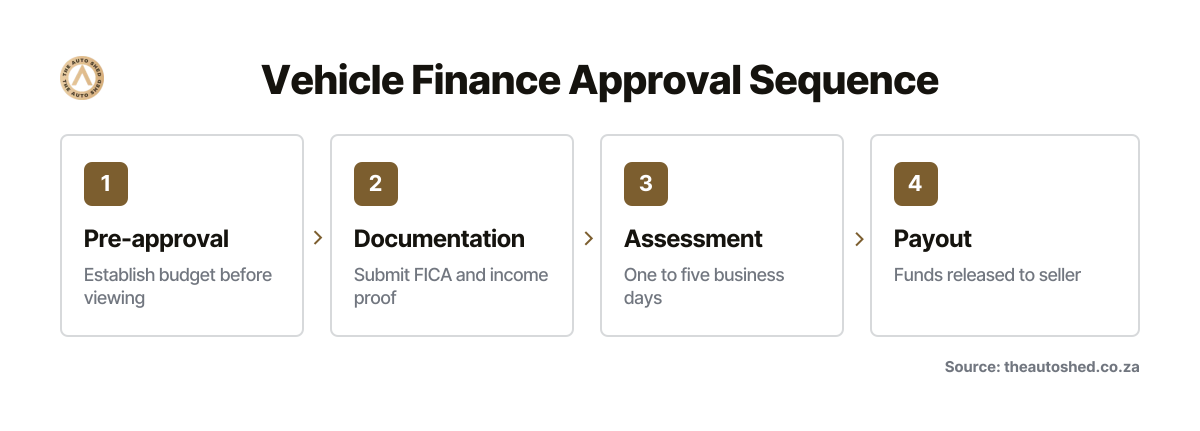
Lenders can't proceed without full FICA compliance and verifiable proof of income, so gather these documents before applying. Missing paperwork is the most common reason applications stall, particularly for self-employed professionals whose income needs extra validation.
Essential documentation checklist
South African banks want certified copies of your ID, three months of bank statements, and three months of payslips or audited financials if you're self-employed. Proof of residence must be current and match your application exactly, because a mismatch triggers an automatic compliance hold that pauses the whole process. Having these documents ready before you submit shows the bank you're organised and speeds up the verification stage significantly.
Income verification and affordability ratios
Underwriters work out your debt-to-income ratio by dividing total monthly debt by gross income, and this figure usually needs to stay below forty percent for unsecured lending. For premium vehicle finance, lenders often apply stricter internal benchmarks, so you're left with enough disposable income after every commitment is met. Factor in running costs beyond the instalment itself. We'd recommend reviewing what a car really costs to run before you finalise your budget.
Vehicle Finance Credit Score SA: What Matters Most
Your credit profile directly shapes the interest rate you're offered, because lenders use risk-based pricing that rewards lower-risk borrowers with better terms. No universal minimum score guarantees approval. Consistent payment history and low credit utilisation matter far more than any single number.
How credit bureaus influence interest rates
TransUnion, Experian and XDS each keep independent records of your credit behaviour, and lenders may check one bureau or several when assessing your application. Your credit score reflects historical reliability, not current wealth, which is why established professionals with thin credit files sometimes face higher rates than people with longer track records. Adverse listings like judgements or defaults carry real weight regardless of income, because they signal past difficulty meeting obligations.
Improving your profile before applying
Check your credit report for errors and dispute incorrect listings weeks before you intend to buy, not the week of. Paying down revolving credit balances lowers your utilisation ratio and shows lenders you manage debt actively. These are honest ways to strengthen your position, not score inflation tactics; experienced underwriters spot those easily.
How Long Does Car Finance Take to Finalise?
Vehicle finance approval typically takes between one and five business days, depending on how complete your documents are and how busy the lender is. Rushing rarely helps. A thorough assessment protects both you and the bank from a commitment neither of you can sustain.
Typical timelines from application to payout
Preliminary feedback often arrives within twenty-four hours of a complete submission, but final approval needs full verification and sometimes manual underwriting for complex cases. Payout to the seller only happens once every condition is met and signed contracts come back, which adds another day or two. Plan your vehicle collection around that realistic schedule rather than expecting an instant decision on a substantial credit facility.
Factors that delay approval decisions
Incomplete documentation, outstanding judgements and employer verification failures all stretch processing times past the norm. Applications submitted late on a Friday or just before a public holiday face longer queues too, as banking systems reset and staff numbers drop. Make sure every document is legible, current and correctly formatted. That alone removes the most common hold-up for eager buyers.
Deposits, Balloons and Structuring Your Deal
A larger deposit cuts your monthly obligation and the total interest you pay over the term. A balloon payment lowers the instalment instead, at the cost of a substantial lump sum due at the end of the contract. Neither structure beats the other outright; the right one depends on your cash flow and what your liquidity looks like down the line. Our team brings over 28 years of combined motor industry experience to help structure deals that suit premium vehicle buyers, rather than pushing a generic template.
Every vehicle we finance goes through a strict Autoshed Approved inspection, which gives lenders confidence in the asset's value and condition throughout the loan term. That matters because banks assess the collateral as carefully as they assess you, and a well-maintained vehicle supports stronger finance terms. If a vehicle isn't good enough for our family, it isn't good enough for yours, and that standard extends to how we handle the financial side of the deal too.
You can estimate your potential deposit using our trade-in value calculator to see how your current vehicle affects the new deal structure. A larger deposit also improves approval chances for a borderline application, since it reduces the lender's exposure and shows commitment.
Common Reasons for Decline and Next Steps
High debt-to-income ratios, adverse credit listings and insufficient documented income account for most declines in the premium segment. Don't guess at the reason. Ask the lender for specific feedback. It's actionable, and speculation just wastes time. Some applicants simply need to restructure existing debt, or wait for an adverse listing to age, before reapplying successfully.
A specialist broker can uncover alternative lenders or structuring options that mainstream banks rule out automatically, particularly for self-employed buyers or anyone with an unusual income pattern. Over 70% of our business comes from repeat customers and referrals, which tells us something about the trust people place in our finance process, even when a first application doesn't go through. We see a decline as the start of a conversation about improvement, not a final verdict on your ownership plans.
Securing Pre-Approval Through Trusted Partners
Our finance advisors know premium pre-owned valuations and buyer profiles well, which lets them present your application in the strongest light to several lending partners at once. That matters because a generic online portal can't advocate for the nuances in your situation, or explain a temporary anomaly that an automated system flags as a problem. A knowledgeable intermediary managing the paperwork also protects your credit record from unnecessary hard enquiries.
Our vehicle finance options connect you with partners who specialise in quality pre-owned assets, not volume sales, so their incentives line up with your long-term satisfaction. We'd also point you to our guide on buying from a dealer vs private seller to see why bank-approved dealership purchases often face fewer finance hurdles than private ones. Apply for pre-approval through a trusted partner, and you'll have your budget set and a competitive rate secured before you've even committed to a specific vehicle.
Frequently Asked Questions
Is it easy to get accepted for car finance?
Acceptance depends entirely on your affordability, credit history and documentation completeness rather than any universal ease metric. Premium vehicle finance requires stronger profiles than entry-level lending, but well-prepared applicants with stable incomes typically secure approval. Working with experienced facilitators improves outcomes by ensuring applications meet specific lender criteria from the outset.
What credit score is needed for a R500,000 car loan?
No single score guarantees approval for any amount, as lenders assess affordability and payment history holistically rather than against fixed thresholds. Higher loan amounts generally require demonstrated credit maturity and lower debt-to-income ratios regardless of your numerical score. Focus on maintaining clean payment records and manageable existing debt rather than chasing arbitrary score targets.
What does car finance mean?
Car finance is a secured loan where the vehicle serves as collateral until you repay the borrowed amount plus interest according to agreed terms. The lender retains ownership rights during the contract period, allowing repossession if you default on payments. This structure enables buyers to acquire vehicles without paying the full purchase price upfront while spreading costs over several years.
What is the 50% rule for car finance?
The 50% rule suggests your total vehicle expenses including finance, insurance and running costs should not exceed half your monthly household income to maintain financial health. This guideline helps prevent overcommitment on depreciating assets that strain broader budget priorities. Individual circumstances vary significantly, so treat this as a starting point for discussion rather than a rigid lending requirement.