
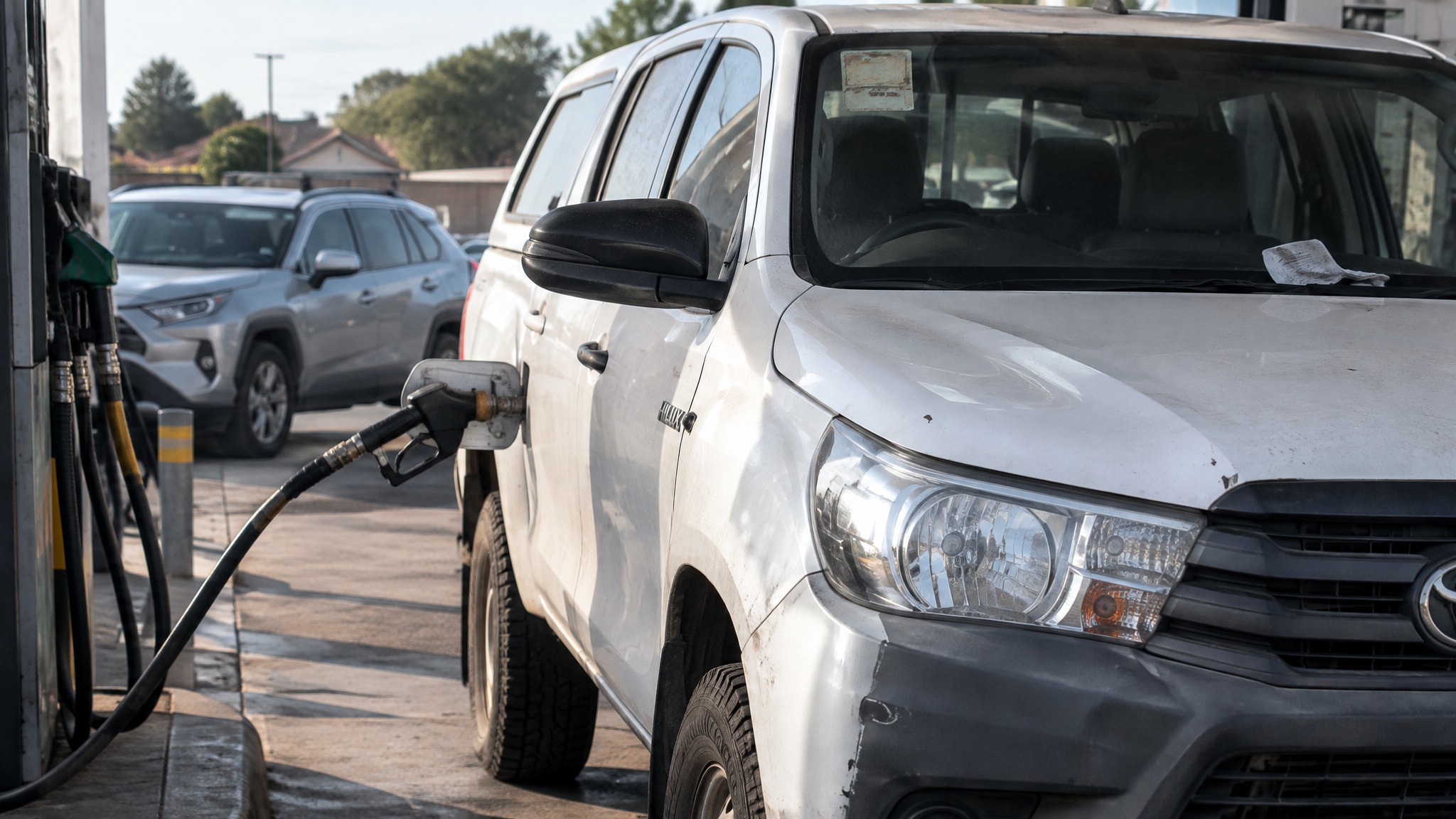
Choosing between a hybrid and a diesel vehicle in 2026 means looking past the fuel pump to where your money actually goes over three to five years of ownership. South African buyers face their own variables, from Gauteng traffic to long-distance holiday travel, and these make brochure efficiency figures unreliable guides to real-world value.
We've found the right choice depends on how you drive, not what the brochure claims. A cheaper diesel bakkie often gives you better cash flow than a premium hybrid SUV, even with higher fuel costs. Over 70% of our business comes from repeat customers and referrals who care about long-term value and transparency over speculative technology, and they know total cost of ownership includes depreciation, insurance premiums and service plans, not just litres per 100km.
The Real Cost of Ownership Beyond Fuel Consumption
Your budget has to account for the vehicle's complete financial lifecycle. Focus only on fuel economy and you miss the larger expenses that actually decide affordability. You might save R3,000 a month at the pumps and still lose R50,000 a year to steeper depreciation or higher insurance, which wipes out the fuel saving entirely.
Diesel vs Hybrid Ownership Factors
| Factor | Diesel | Hybrid | |
|---|---|---|---|
| Urban Fuel Economy | – | Moderate | 30–40% savings |
| Highway Efficiency | – | Optimal range | Minimal gain |
| Resale Predictability | – | Stable, documented | Battery-dependent |
| Service Accessibility | – | Widespread | Brand dealer Network |
| Major Repair Risk | – | Mechanical, known | Battery (cost varies by model) |
Why Purchase Price Still Dictates Value
The initial outlay sets the baseline for every calculation that follows, since financing costs and depreciation both stem from this figure. A pre-owned diesel model typically enters the market at a lower price than an equivalent hybrid, which cuts both your deposit and the interest you pay over the loan term.
This price advantage compounds, because hybrids carry a technology premium that depreciates faster than a mechanical drivetrain does. Our 28+ years of combined motor industry experience shows that established diesel platforms often give high-mileage South African drivers more predictable running costs than early-generation hybrids. Their value retention follows decades of proven market data, not battery chemistry speculation.
Insurance and Maintenance Variables
Insurers price risk on repair complexity and parts availability, and that currently favours conventional powertrains in many categories. Hybrid vehicles can attract higher premiums because of specialist repair requirements and expensive battery components. That's a fixed monthly cost that stays whether you burn much fuel or none.
Maintenance budgets need the same scrutiny beyond standard service intervals. Hybrids use regenerative braking to cut pad wear, but they bring electrical complexities that demand specialised diagnostic equipment and trained technicians, which can push up labour rates and narrow your choice of independent workshops.
Diesel Bakkies and SUVs: Where They Still Win Financially
Diesel remains the pragmatic choice for South Africans who drive long distances or carry heavy loads, because torque and range matter more than urban efficiency here. Established diesel models deliver consistent performance and predictable costs in conditions where hybrids rarely realise their theoretical advantages.
High-Mileage Commuting and Towing Demands
Long-distance highway driving neutralises the hybrid advantage, since electric motors contribute little at sustained speed while diesel engines run in their most efficient range. The Ford Ranger and Toyota Fortuner, for example, consistently show strong residual values in the pre-owned market thanks to proven durability and parts availability, which makes them a financially safer bet if you cover 30,000km or more a year.
Towing widens the gap further. Diesel torque handles caravans and trailers without the strain that degrades a hybrid's battery and cuts its efficiency. If your lifestyle means regular towing or open-road touring, the diesel's mechanical simplicity means less stress on the vehicle and on your wallet.
Resale Value Stability in the SA Market
Buyer confidence in used diesels comes from generations of mechanical familiarity and service infrastructure across South Africa. That deep market liquidity means you can sell a well-maintained diesel bakkie or SUV quickly, at a predictable price. Hybrid resale values, by contrast, move with battery health reports and warranty status.
Depreciation curves for popular diesel models are thoroughly documented, so you can forecast trade-in values with reasonable accuracy. Hybrid depreciation is harder to model, because battery degradation varies a lot with usage and climate, and that uncertainty is something prudent buyers price into their offers.
Hybrid Efficiency: Calculating True Savings in Gauteng Traffic
Hybrid technology pays off genuinely in stop-start urban driving, where regenerative braking recaptures energy a conventional vehicle wastes as heat. Your savings show up mainly in peak-hour commutes through Johannesburg or Pretoria, then shrink fast once you merge onto the N1 or head off on a weekend trip.
Urban Stop-Start vs Open Road Reality
The gap between official consumption figures and real-world results narrows in dense traffic, where hybrids can manage 30–40% better economy than equivalent petrol models. That advantage reverses on the highway, though, where the extra weight of battery packs adds rolling resistance and the electric motor contributes far less at sustained highway speeds.
Working out your personal break-even point means being honest about your weekly split between urban congestion and open road. Many buyers overestimate how much city driving they do and end up paying for hybrid capability they rarely use. Tracking your actual routes for a month before you buy gives you the data this decision needs.
Battery Replacement and Warranty Considerations
An out-of-warranty battery replacement is the single biggest financial risk for a second-hand hybrid buyer, with costs that vary widely by model and can be substantial on premium hybrids. Many hybrids sold in South Africa, including Toyota’s Corolla Cross, carry an 8-year/195,000km battery warranty, so check exactly how much cover remains. That looming expense suppresses used hybrid values as vehicles reach eight to ten years old, whatever the mechanical condition or service history looks like.
Warranty coverage varies a lot between manufacturers, and transfer policies differ for pre-owned sales. Checking what hybrid system warranty actually remains before you buy isn't optional. Assume cover exists when it doesn't, and a bargain turns into a liability overnight.
Depreciation Curves: Comparing Used Diesel and Hybrid Values
Hybrids save fuel, but their steeper initial depreciation can cancel that saving out over a typical three-to-five-year ownership cycle. Weigh projected resale value against cumulative fuel savings to see which powertrain actually costs less over the period you plan to keep it.
Diesel vehicles depreciate along predictable lines tied to mileage and service history. Hybrid values hinge on battery state-of-health assessments, which introduce subjectivity and negotiation friction. Pre-owned buyers discount hybrids that lack recent battery diagnostics, so sellers either accept lower prices or pay for testing that may reveal costly degradation anyway.
The maths favours diesel if you're planning a shorter ownership period, because the fuel savings needed to offset hybrid depreciation build up slowly. Only buyers who keep a hybrid for seven years or more typically recover enough at the pump to justify the upfront premium and the steeper early depreciation.
Maintenance and Service Plan Implications for Pre-Owned Buyers
Service plan coverage deserves a close look, because hybrid and diesel maintenance schedules diverge sharply once the initial warranty expires. Know exactly what's still covered and what falls to you, since unplanned out-of-plan expenses can throw your ownership costs off badly.
Complexity Costs in Hybrid Systems
Repairs to a hybrid’s high-voltage system need specially certified technicians, which narrows your workshop options and can push up labour rates compared with conventional mechanics. Diagnosing an electrical fault eats billable hours even when no parts need replacing, and the specialist tools involved mean independent garages often can't match dealer pricing on hybrid-specific work.
Component longevity differs too. Inverters and DC-DC converters carry replacement costs that dwarf typical diesel maintenance items. These failures are rare but expensive, which creates lumpy spending that contrasts with the steady, predictable servicing costs of a mechanical drivetrain.
Diesel Service Intervals and Parts Availability
Diesel engines benefit from South Africa's extensive commercial vehicle infrastructure, so parts are available even in smaller towns and pricing stays competitive across multiple supply channels. Independent specialists can service most diesel models competently, which gives you an alternative to dealer networks and helps control costs once the factory plan expires.
Every vehicle we stock goes through a strict Auto Shed Approved inspection before sale, checking mechanical integrity so you can trust the service history is accurate and no deferred maintenance is waiting to surprise you. That matters especially for diesels, where a skipped oil change or filter replacement is usually a sign of broader neglect that shows up later as an expensive repair.
Making the Right Choice for Your Family's Budget
The decision really comes down to matching the powertrain to your driving environment, annual mileage and how long you intend to keep the vehicle, rather than chasing a universal efficiency claim. Hybrid technology suits urban commuters with predictable short trips and verified warranty cover. Diesel suits high-mileage driving, towing, and buyers who want resale certainty.
If efficiency is your priority and your pattern suits hybrid driving, fuel efficient cars in South Africa covers models with proven local track records. If you're weighing up specific SUV options, our Fortuner versus Everest comparison looks at two diesel benchmarks in detail.
Understanding your monthly car running costs in full prevents surprises after purchase, because an informed buyer chooses a vehicle that fits their finances, not an aspirational ideal. If a vehicle isn't good enough for our family, it isn't good enough for yours, so have a look at our approved inventory and speak to our team about your specific needs.
Frequently Asked Questions
How much fuel do hybrid vehicles actually save in South African conditions?
Hybrids typically save 30–40% fuel in heavy urban stop-start traffic compared to equivalent petrol models, but this advantage diminishes significantly on open highways where savings may drop below 10%. Your actual savings depend entirely on the proportion of city versus highway driving in your weekly routine.
Should I buy a diesel or petrol car in 2026?
Diesel remains the better financial choice for drivers covering over 30,000km annually or requiring towing capacity, due to superior highway efficiency and stronger resale values. Petrol or hybrid suits lower-mileage urban drivers who rarely tow and can verify remaining hybrid warranty coverage.
What is the downside of having a hybrid car?
The primary downsides are higher purchase prices, potentially high battery replacement costs once the battery warranty expires, and limited independent workshop options for high-voltage system repairs. Resale values also carry more uncertainty than equivalent diesels due to battery health variability.
Do hybrids save money overall compared to diesel?
Most South African drivers do not recover the hybrid purchase premium through fuel savings alone within a typical three-to-five-year ownership period. Hybrids only become financially advantageous for urban commuters keeping the vehicle seven or more years with verified warranty protection throughout.