

Transferring vehicle ownership in South Africa is a precise process, whether you're buying a premium SUV or selling a trusted bakkie. The exchange of keys and funds feels like the end of a sale, but the legal transfer of liability only happens once the National Traffic Information System (NaTIS) reflects the new owner's details. Understanding how to transfer car ownership in South Africa protects both parties from future financial exposure and keeps the vehicle's history unbroken.
We've guided countless professionals through this exact procedure over our 28+ years in the motor industry. Paperwork errors cause far more delays than mechanical faults do. This guide sets out the statutory requirements, the documents you'll need, and the practical steps that keep your transaction compliant.
Understanding the Legal Timeframes for Ownership Transfer
The law gives you no grace period once a sale agreement is signed. Both buyer and seller must submit the Notification of Change of Ownership (NCO) form to their licensing department within 21 days of the transaction. Miss that window and you remain liable for traffic violations or accidents involving the vehicle (Bona). The deadline is absolute, whether the vehicle was bought with cash or financed.
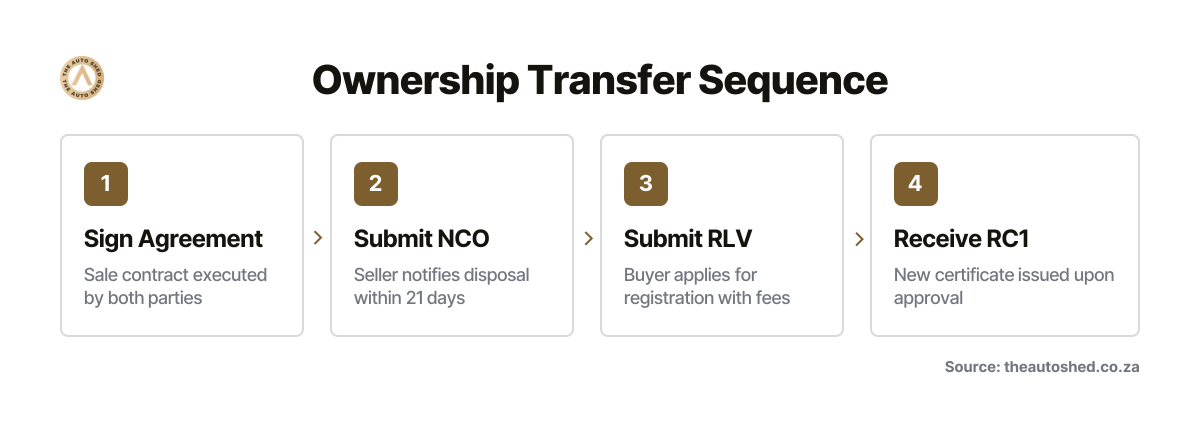
Miss it, and the seller carries the risk, because they remain the registered titleholder until the system updates. You could face fines for speeding cameras or toll fees run up by the new driver if the NCO submission lags past the statutory limit. Buyers face their own penalties for late registration. These accumulate monthly and can complicate resale or refinancing later.
The buyer must also submit the Application for Registration and Licensing of Motor Vehicle (RLV) form, with the applicable fees paid, within the same 21 days, to register the car in their name. Together, the two forms shift liability cleanly and keep the state's records accurate on who operates each vehicle on public roads.
Essential Documents Required for Transferring Vehicle Ownership
Missing paperwork is the single most frequent reason licensing departments reject transfer applications, and it can cost you weeks. Gather these documents before you visit the licensing office. It saves a second trip and keeps the transaction inside the legal timeframe.
Seller Documentation Checklist
Sellers must provide a certified copy of their ID and the original registration certificate, commonly known as the RC1 or NaTIS document. If the vehicle is financed, the bank holds the original RC1, so you'll need a settlement letter confirming the outstanding balance instead. A valid roadworthy certificate issued within the last 60 days is also mandatory, along with proof of residential address no older than three months.
Buyer Documentation Checklist
You must present your own certified ID copy and proof of residence when you submit the RLV form at the licensing department. Registering the vehicle in the name of a company or trust means additional paperwork, such as CIPC registration papers and a resolution authorising the purchase. Foreign nationals need a valid passport and a temporary residence permit or asylum seeker visa to complete the registration legally.
Licensing officials check every document against national databases, so even a small mismatch between the ID number on the form and the supporting paperwork will halt the application.
Step-by-Step Process for Private Sales and Dealer Transactions
Navigating the bureaucracy takes patience, but knowing the sequence is what separates a smooth handover from an administrative headache. The process starts long before you stand in a queue at the licensing office, with the correct completion of the statutory forms.
Completing the NCO and RLV Forms Correctly
Both the NCO and RLV forms require black ink and block capitals; corrections or white-out render them invalid. Sellers complete the NCO to notify authorities they've disposed of the vehicle, while buyers fill out the RLV to apply for registration in their name. You can get these forms at licensing departments or download them from provincial transport websites, though plenty of applicants still confuse the seller's declaration section with the buyer's undertaking.
Submitting Paperwork at the Licensing Department
Once the forms are signed and the documents collated, you submit everything at the nearest vehicle licensing office, along with the transfer fee and any arrears owing. Buy a premium used bakkie or SUV from a trusted dealer, though, and the ownership transfer is typically managed end-to-end, with all NCO and RLV submissions meeting the 21-day legal requirement without you having to lift a finger. The distinction matters when you're weighing up buying from a dealer versus a private seller, since professional handling takes the compliance burden off your shoulders entirely.
Private buyers have to visit the licensing department themselves. Reputable dealerships often have dedicated channels or representatives who handle submissions on a client's behalf.
Transferring Ownership When Buying a Financed Vehicle
Finance brings a third party into the equation, and that makes the transfer contingent on bank approval and settlement. You can't legally take ownership of a vehicle still under finance until the lending institution releases its claim on it.
Settling Outstanding Finance Before Transfer
The seller needs a settlement letter from their bank stating the exact amount required to clear the debt, and that figure has to match the vehicle's VIN precisely. Never pay a deposit directly to a seller without verifying this letter first. The funds could vanish while the bank still holds title. If you're arranging new finance yourself, securing finance for a used car is worth a read, since it helps you line up the payout timeline with the 21-day transfer window.
Changing the Titleholder After Settlement
Once the bank receives full settlement, it releases the original NaTIS document, either to the seller or to the new financier, depending on whether the buyer is paying cash or refinancing. Only then can the licensing department update the system with the new owner's details. This release typically takes two to five business days after payment clears, so timing the settlement close to the sale date matters if you want to stay inside the statutory deadline.
Bank releases tend to slow down during month-end processing peaks, so starting settlement early is the safer bet.
Special Circumstances: Deceased Estates and State-Owned Vehicles
Standard transfer procedures assume a living, competent seller, but inheritance and government disposals follow different rules entirely. These transactions need extra legal authority and often take longer because of the added verification involved.
Transferring a vehicle from a deceased estate requires Letters of Executorship from the Master of the High Court, authorising the executor to sell assets on the estate's behalf. The executor signs the NCO form in that official capacity rather than as a private individual, and the licensing department cross-references it against the estate's file. Buying a state-owned vehicle brings its own complications, including statutory declarations and treasury approvals that add bureaucratic layers to what would otherwise be a simple transfer.
This guide doesn't replace specialist legal advice for estates or government tenders. Each case carries its own liabilities that general motoring guidance can't cover.
Avoiding Common Pitfalls During the Transfer Process
Rush a transfer without proper checks and problems tend to surface months later, right when you try to sell or license the vehicle again. Diligence during the pre-purchase phase costs nothing and saves you expensive rectification work down the line.
Verifying Vehicle Legitimacy Before Purchase
Cloned vehicles and stolen cars with falsified VINs occasionally turn up in the private market, and transferring ownership of one drags the buyer into criminal proceedings. A vehicle identification check through services like TransUnion or HPI reveals outstanding finance, theft flags and mileage discrepancies before any money changes hands. Reputable dealers run these checks as standard practice, but private buyers need to commission them independently, or risk inheriting someone else's legal trouble.
Ensuring Roadworthiness Compliance
An expired or fraudulent roadworthy certificate stops the transfer dead at the licensing counter, leaving the buyer with a car they can't legally drive. Sellers sometimes present outdated certificates hoping nobody notices, but licensing officials check the certificate number against testing station records instantly. A certified pre-owned inspection checklist is worth going through before you commit, so you know the vehicle meets safety standards ahead of the purchase and the transfer that follows.
Over 70% of our business comes from repeat customers and referrals, because we handle every ownership transfer with the same care we'd give our own family's vehicle.
Why Professional Assistance Matters for Smooth Ownership Transfers
Administrative precision is what separates a smooth acquisition from a drawn-out ordeal that eats your time and peace of mind. Experienced dealers streamline the paperwork, check the documentation, and liaise directly with licensing authorities, so you don't have to. Our team manages these transfers daily. We know where the bottlenecks sit, and we resolve discrepancies before they turn into rejections.
If you'd rather skip the licensing department queues entirely, you can sell your car through our streamlined process, where we handle every form and submission on your behalf. Whether you're buying or selling, putting the transfer in professional hands keeps you inside the 21-day window and keeps your records clean and verifiable.
Frequently Asked Questions
Can I change car ownership online in South Africa?
No, South Africa does not currently offer a fully online system for transferring vehicle ownership. You must submit physical NCO and RLV forms at a licensing department or through an authorised dealer representative. Some provinces allow online booking for appointments, but the actual document verification and fee payment require in-person attendance.
How much does it cost to transfer car ownership in SA?
Transfer fees vary by province and vehicle tare mass, typically ranging from R300 to R600 for standard passenger vehicles. Additional costs include arrears on outstanding license discs and the roadworthy test fee if a new certificate is needed. Dealers may charge an administrative fee for managing the paperwork on your behalf, which should be disclosed upfront.
What happens if I miss the 21-day ownership transfer deadline?
Late transfers incur monthly penalties calculated from the date of sale, which accumulate until the registration is updated. The seller also remains liable for any traffic fines, toll fees, or accident claims linked to the vehicle during the delay period. Rectifying a late transfer requires the same documentation plus payment of all accrued penalties at the licensing office.
Do I need a roadworthy certificate to transfer ownership?
Yes, a valid roadworthy certificate issued within 60 days is mandatory for all private and dealer transfers. Without it, the licensing department will reject the RLV application regardless of other documentation being in order. The certificate must be from an accredited testing station and match the vehicle's VIN exactly.