
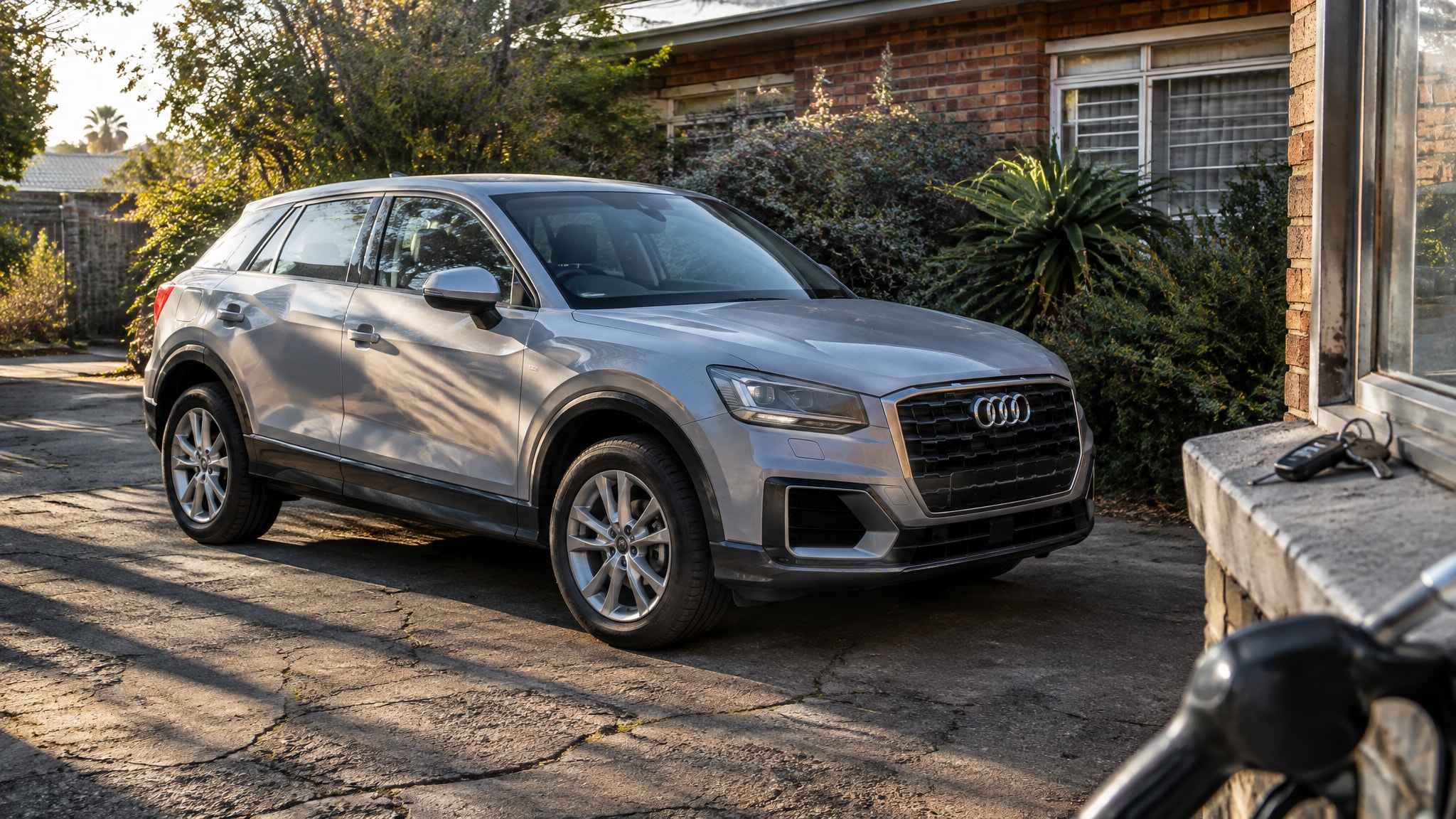
Two shifts are reshaping the South African premium used car market right now, and both matter for your next purchase. Audi has discontinued the A1 and Q2 locally. Meanwhile, a temporary fuel levy cut from 4 November will hold petrol prices roughly steady and bring diesel down, after months of record increases.
Together, these create a window for established professionals who'd rather have quality and long-term reliability than the lowest sticker price. If you've been weighing up a compact premium vehicle, or waiting for fuel costs to settle before committing to an upgrade, this is a moment for a plan, not a reaction.
Why the Audi A1 and Q2 Are Now Discontinued in South Africa
Audi South Africa has stopped manufacturing and importing both the A1 hatchback and the Q2 compact crossover. They're gone from new vehicle showrooms. Pre-owned examples are now the only route to ownership, which changes how you need to go about buying one.
Discontinued vs supported premium compacts
| Production | Parts support | Resale stability | |
|---|---|---|---|
| Audi A1 & Q2 | Discontinued | Winding down | Strengthening |
| Mercedes A-Class & GLA | In production | Full dealer network | Stable |
| BMW 1 Series & X1 | In production | Full dealer network | Strong |
The end of production for Audi's entry-level models
This is part of a broader global rationalisation, as manufacturers consolidate platforms and chase electrification and higher-margin segments. For South African buyers, the A1 and Q2 join a list of models that quietly left SA showrooms in recent years. The job of verifying a car's history now sits entirely with the secondary market.
You can no longer lean on dealer demo stock or manufacturer warranties to confirm condition. Provenance becomes the single most important factor in your decision.
What this means for local buyers in 2026
As factory support winds down, parts and specialist knowledge will get harder to find for these model lines. That doesn't make them unbuyable. It does mean buying one without thorough checks carries a risk that simply didn't exist while they were still in production.
The used market has absorbed this already. Well-maintained examples with complete service histories are commanding stronger resale values, because supply is now fixed.
Sourcing a Used Audi A1 or Q2 After Discontinuation
Finding a reliable used A1 or Q2 takes more legwork than scrolling listings, because the manufacturer's safety net is gone. With over 28 years of combined motor industry experience, we'd advise extra diligence on service history for any discontinued model. Gaps in the records matter far more once factory support can no longer fill them in.
Checking vehicle history and maintenance records
Every service stamp counts for more now. Independent specialists need complete documentation to diagnose issues without dealer diagnostic tools, so ask for full service invoices rather than just logbook stamps. Detailed records show that a previous owner kept up proper care, particularly through the period since discontinuation was announced.
Pay close attention to timing belt replacements, turbocharger health on TFSI engines, and mechatronic unit servicing on DSG gearboxes. These are known wear items, and neglect turns them into expensive failures.
Why dealer vetting matters more than ever
Over 70% of our business comes from repeat customers and referrals, people who trust our strict Autoshed Approved inspection process. That loyalty exists because buying a discontinued model without a professional check is a gamble most private buyers can't afford to lose. We hand-select our premium used vehicles and put them through comprehensive vetting to meet family-grade safety and reliability standards, which includes confirming that any recall work or technical service bulletins have been actioned.
Private sellers rarely say why they're moving on from an orphaned model. A reputable dealership, by contrast, stakes its reputation on having already found and fixed whatever issues exist, before the car reaches your driveway.
November Petrol Price Relief: What Drivers Can Expect
In the October 2026 Medium-Term Budget, Finance Minister Enoch Godongwana announced a temporary fuel levy cut of R1.50 per litre on petrol and R3.00 per litre on diesel, from 4 November to 1 December. Smaller cuts of R1.00 (petrol) and R1.50 (diesel) apply until 5 January 2027. Because international prices are still pushing fuel up, the petrol cut mostly cancels out an expected increase, while diesel should come down. What to expect after October's hike is worth reading alongside this, since it frames the adjustment as a temporary reprieve rather than a lasting shift in fuel costs.
What’s behind the November relief
The relief comes from Treasury, not the market. Oil prices remain high due to conflict in the Middle East, and a weaker rand has added to the pressure. The levy cut is temporary and scales down from December, so the relief is real but could prove short-lived depending on geopolitics and currency swings in the weeks ahead.
For budgeting purposes, treat this as a welcome dip in running costs rather than licence to permanently raise your monthly transport spend.
How lower petrol prices impact upgrade decisions
Steadier petrol prices and cheaper diesel improve the maths on upgrading to a premium used vehicle, because a pause in rising running costs makes it easier to absorb a higher finance instalment or insurance premium. That breathing room lets you move up a specification without stretching the household budget.
Many buyers use these windows to lock in a good trade-in value before sentiment shifts again.
Timing Your Car Upgrade With Fuel Price Fluctuations
Buyers have long used fuel price relief to offset the cost of moving to a newer or higher-spec vehicle, treating it as a window rather than luck. The maths is simple: every rand saved per litre adds up to real monthly disposable income, which can go straight into finance repayments or a maintenance reserve.
This works best if you act while the relief holds, locking in financing and trade-in values before fuel prices adjust upwards again, as they tend to. Waiting for perfect conditions often means missing the good ones in front of you, and the last A1 and Q2 stock lining up with temporary levy relief is exactly that kind of moment.
We offer nationwide delivery and flexible financing tailored to established professionals who want quality assurance over the lowest price, so you can take advantage of this window wherever you are in South Africa.
Premium Alternatives to the Audi A1 and Q2 in the Used Market
If the A1 and Q2 going out of production gives you pause, several comparable premium pre-owned vehicles offer similar size, prestige and driving dynamics, with better long-term parts support behind them. Looking elsewhere doesn't mean giving up on German engineering. It means choosing based on where the market stands now, rather than loyalty to a model line that no longer exists.
Compact SUVs and hatchbacks worth considering
The Mercedes-Benz A-Class and GLA are still in production, with full manufacturer support behind them. The BMW 1 Series and X1 offer similar driving engagement with steadier resale values. If you're open to non-German badges, the Volvo XC40 and Lexus UX bring comparable luxury with strong reliability records and service networks that are easy to find.
You can view our current premium inventory to compare these against available A1 and Q2 examples, side by side on condition and spec rather than badge alone.
Balancing luxury features with running costs
Choosing an alternative usually means trading away certain Audi traits for broader peace of mind on ownership, and that trade-off deserves an honest look rather than a knee-jerk dismissal. For some buyers, downsizing to beat fuel prices makes more sense than holding out for a discontinued model, especially once November's petrol relief improves the economics of a slightly larger but more efficient platform.
The right vehicle is the one that serves you reliably for years, not the one that matches a badge you can no longer buy new.
Securing Finance for Pre-Owned Luxury Vehicles in 2026
Lending criteria for used premium cars remain supportive for established professionals with stable income and a good credit history, though banks are scrutinising vehicle condition more closely than they used to. Transparent history and thorough preparation are what secure competitive finance rates on cars like the A1 and Q2, because lenders treat well-documented examples as lower-risk and price them accordingly.
Dealerships that specialise in premium pre-owned vehicles understand this and build applications around provenance rather than hoping condition speaks for itself. That means independent valuations, complete service documentation, and presenting the car in retail-ready condition, which reassures lender and buyer alike.
Your finance approval should reflect what a properly vetted vehicle is actually worth, not a discounted figure that incomplete records might otherwise suggest.
Finding Your Next Vehicle With The Auto Shed
Audi's discontinuation of the A1 and Q2, arriving alongside November's expected petrol relief, makes this a moment for decisive action, whether you want one of the last well-maintained examples or a supported alternative instead. Our hand-selected inventory reflects over 28 years of combined motor industry experience, applied to finding vehicles that meet our standards. If a vehicle isn't good enough for our family, it isn't good enough for yours.
Explore our Autoshed Approved vehicles or talk to us about your trade-in value while this pricing window holds. Our commitment to transparency and long-term relationships doesn't end at the sale.
Frequently asked questions
Are the Audi A1 and Q2 still being sold as new cars in South Africa?
No, Audi has officially discontinued both the A1 hatchback and Q2 compact crossover in South Africa, and they are no longer available as new vehicles from dealerships. Pre-owned examples through reputable used car dealers are now the only way to acquire these specific models.
Is petrol expected to be cheaper in November 2026?
Yes, South African motorists are anticipating meaningful petrol price relief in November 2026 due to improved rand strength and softer international crude oil prices. This relief is considered temporary and dependent on ongoing currency stability and global market conditions.
Does a drop in fuel prices make it a better time to upgrade my car?
Yes, lower fuel prices improve the affordability calculation for upgrading because monthly savings at the pump can offset part of your increased finance instalment or insurance premium. Many buyers use these relief periods strategically to secure better trade-in values before market conditions tighten again.
What should I check when buying a discontinued Audi model?
Request full service invoices rather than just logbook stamps, verify that all recall work and technical service bulletins have been completed, and pay particular attention to timing belt replacements, turbocharger health, and DSG gearbox servicing. Purchasing through a dealership with rigorous inspection standards significantly reduces risk compared to private sales.