
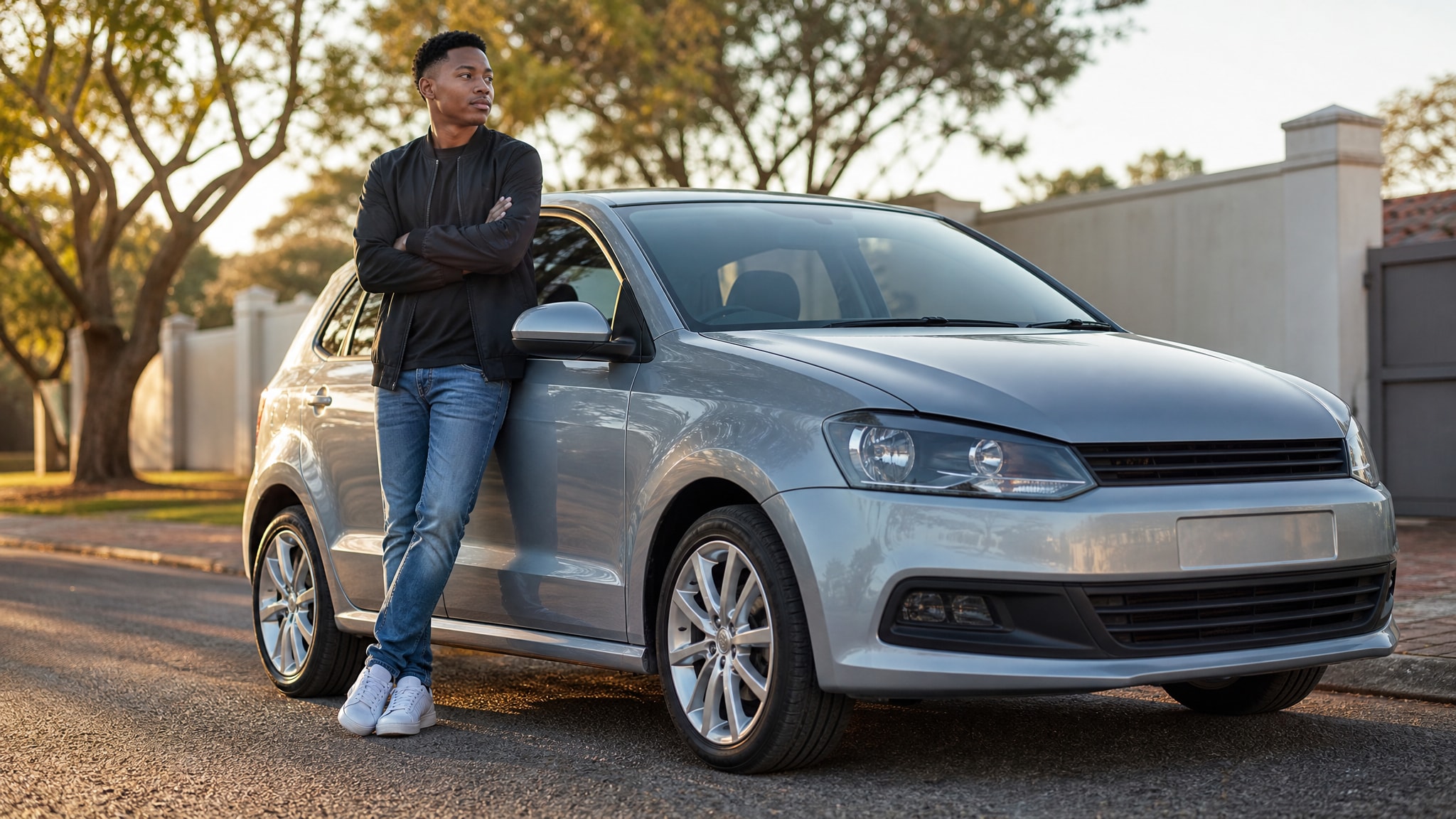
Choosing the best first car for a new driver in South Africa means balancing what you can afford now against what gives you peace of mind later. New drivers face real pressure on our roads: unpredictable traffic, patchy surfaces, other people's mistakes. Reliability matters more here than novelty or performance. We believe your first car should protect your safety and your finances, not become a burden that limits where you can go.
Defining the Best First Car for a New Driver in South Africa
You need a car that forgives mistakes, costs little to run, and sells easily when you're ready to upgrade. The right choice combines strong local parts availability, mechanical simplicity and decent crash protection, without punishing you on insurance or fuel. Get these practical things right and your first car becomes a stepping stone. Get them wrong and it becomes an expensive lesson in depreciation.
Total cost of ownership is what actually matters, because the purchase price is only a fraction of what you'll spend in your first few years behind the wheel. Paying a little more for a well-maintained example often saves you thousands in repairs and downtime down the line.
Top Recommended Models for Learner Drivers
A handful of models keep coming up because they've proven themselves across South African driving conditions for years. They offer predictable running costs, wide service support and resale values that won't collapse the moment you drive off.
Volkswagen Polo Vivo and Toyota Starlet
The Volkswagen Polo Vivo is frequently cited as a top choice for young South African drivers. It's a bestselling passenger car here, which means parts and service support are everywhere. Its mechanical simplicity means most independent workshops can look after it competently, so your maintenance bills stay manageable once the factory warranty runs out. The Toyota Starlet offers similar strengths, backed by Toyota's reputation for durability, though you'll likely pay a premium for the badge at purchase.
Both hatchbacks have enough ground clearance for urban speed humps and stay compact enough to park with confidence in tight spaces.
Suzuki Swift and Kia Picanto
Smaller city cars like the Suzuki Swift and Kia Picanto come into their own when the budget is tight. Their lightweight build and modest engines mean strong fuel economy, which matters a great deal when petrol prices move around unpredictably. The RAC makes a similar point about the Toyota Aygo: a lightweight body paired with a modest 1.0-litre engine gives very low fuel consumption and cheap repairs. The same logic applies to the Swift and Picanto.
You give up some highway refinement and boot space, but you get genuinely affordable daily transport in return.
Nissan Magnite and Urban Cruiser
Compact crossovers have become popular with new drivers who want extra ride height without SUV-level running costs. The Nissan Magnite and Urban Cruiser give you better ground clearance for rough suburban roads while keeping hatchback-like fuel efficiency. The RAC recommends a 1.2-litre, 80hp petrol engine for the Nissan Micra, calling it willing, frugal and cheap to insure, and the Magnite shares much of that same accessible character.
You get more practicality and better visibility in traffic, usually for a slightly higher price than a traditional hatchback.
Understanding Running Costs and Fuel Efficiency
Your monthly budget depends far more on recurring costs than the sticker price ever suggests. Fuel, insurance and scheduled maintenance are what decide whether your first car stays sustainable or turns into a financial strain within months.
Petrol Consumption Realities
Engine size has a direct effect on what you spend at the pumps, especially in stop-start commuting. Smaller engines generally use less fuel in town, where you're accelerating often but never reaching high speeds. If cutting petrol costs is your main concern, we've put together detailed comparisons of the best fuel efficient cars in South Africa to help you find a model that matches your daily mileage.
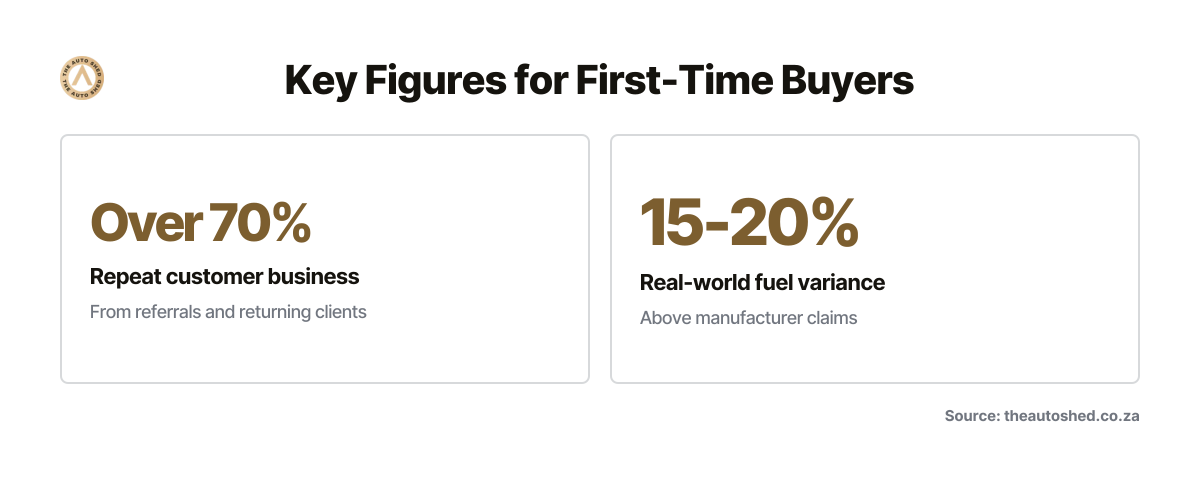
Real-world consumption often runs higher than the manufacturer's claimed figures, so base your sums on what owners actually report rather than brochure numbers.
Insurance Groups for Young Drivers
Insurance is often the single biggest recurring cost for new drivers, sometimes bigger than the finance instalment itself. Premiums depend heavily on the vehicle's specification, theft risk and repair costs, not just on your personal profile. Get a binding quote before you commit to a model; two cars that look alike on paper can sit in very different insurance groups.
A comprehensive policy gives you proper cover, but you need to budget for it carefully so it doesn't lapse during a tight month.
Safety Features That Matter Most
Modern safety technology has improved survival rates in collisions a great deal, though not every feature matters equally for a new driver. Structural strength and active braking systems do more for you than cosmetic upgrades or infotainment screens, especially while you're still developing hazard perception.
Anti-lock brakes and multiple airbags should be non-negotiable, even on a budget used car. Electronic stability control deserves the same priority: it actively prevents the loss-of-control moments that catch new drivers out during emergency manoeuvres or wet weather. Crash test ratings give you objective evidence of how well a car protects its occupants, so check the results for the specific model and year rather than assuming every variant performs the same.
No amount of safety kit replaces attentive driving, but it buys you the seconds you need when your reactions fall short.
Certified Pre-Owned Inspections and Quality Assurance
Buying privately can look cheaper at first, but an undisclosed mechanical problem can turn a bargain into a costly liability within weeks. A proper inspection reveals wear, accident damage and neglected maintenance that an untrained eye won't catch on a short test drive. Over 70% of our business comes from repeat customers and referrals, because we apply strict Autoshed Approved inspection standards to every vehicle we sell.
Our certified pre-owned vehicle inspection checklist sets out exactly what we check, so no hidden fault compromises your safety or your budget. If a vehicle isn't good enough for our family, it isn't good enough for yours, which is why we turn away far more cars than we take into our inventory.
A private sale can't offer that kind of assurance or accountability if something goes wrong later.
Financing Your First Vehicle Responsibly
Getting funding without much credit history takes preparation and realistic expectations about what a lender will approve. First-time buyers often do better through an established dealership that understands entry-level finance, rather than walking into a bank with a thin credit record. Our vehicle finance options include solutions built for new drivers who are still establishing their credit profile.
Weigh your instalment term against the total cost of ownership: stretching the repayment period lowers your monthly outflow but raises the total interest you pay. Don't stretch your finances to the maximum you're approved for, since unexpected costs will turn up during your first year of ownership regardless. Responsible borrowing means keeping headroom for insurance excesses, surprise repairs and routine servicing, so you're never forced into high-interest emergency credit.
Understanding the difference between buying from a dealer vs private seller helps explain why a financed purchase through a reputable dealer often works out better long term, even against a lower advertised private price.
Making the Final Decision With Confidence
A test drive should tell you about mechanical condition, not just comfort or looks. Listen for unusual noises, check that every electronic function works, and test the brakes on a few different surfaces before you commit to anything. Ask for the full service history and check the mileage is consistent; gaps in the records usually point to neglected components that will fail early.
Dealer reputation matters a great deal when you don't have the expertise to judge a car yourself. Choose a seller who welcomes an independent inspection and hands over transparent paperwork, rather than one pushing you towards a quick decision or discouraging you from checking anything. Our transfer car ownership guide will help you get the administrative side right, so you avoid legal headaches later.
Frequently Asked Questions
What is the best first car for a new driver in South Africa?
The Volkswagen Polo Vivo and Toyota Starlet consistently rank highest due to their combination of safety features, affordable parts availability and strong resale values. Both offer forgiving handling characteristics suitable for learners while maintaining low running costs that suit limited budgets. Ultimately the best choice depends on your specific commute distance, insurance quote and available deposit.
How do fuel costs compare between hatchbacks and compact SUVs?
Entry-level hatchbacks typically consume 15-20% less fuel than compact crossovers in urban driving due to lighter weight and smaller engines. Compact SUVs like the Nissan Magnite narrow this gap through modern engine design but still carry a slight consumption penalty. Highway driving reduces the difference significantly as aerodynamic drag becomes the dominant factor regardless of vehicle type.
Which safety features are absolutely essential for a first car?
Anti-lock brakes, dual front airbags and electronic stability control form the non-negotiable safety foundation for any new driver's vehicle. Side airbags and curtain protection add valuable secondary defense in side-impact collisions common at intersections. Never compromise on these core systems to save money on purchase price since repair costs after an accident far exceed initial savings.
Can I get vehicle finance with no credit history?
Yes, many lenders offer first-time buyer finance products specifically designed for applicants with thin credit files. Approval typically requires proof of stable income, a reasonable deposit and sometimes a guarantor with established credit. Dealership finance teams often have access to specialist lending channels that direct bank applications cannot reach.