
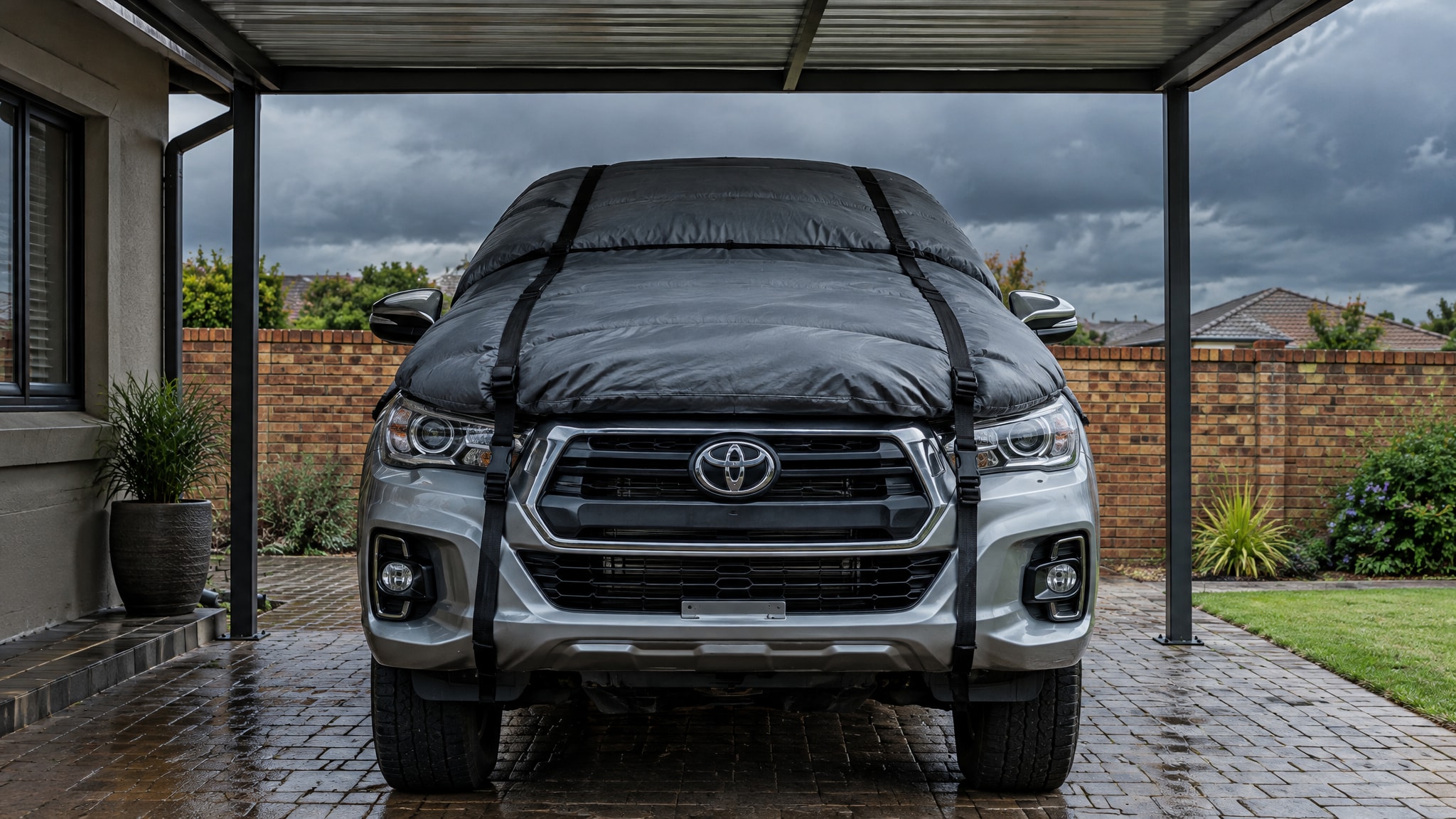
The first afternoon storms of summer are already building over the Highveld, and hail season in Gauteng is under way. Most owners never think about their car's roof until they hear ice hammering on it.
We are based in Centurion, in the middle of the hail belt, so we see the aftermath often. This guide covers what we have learned: how to protect your car from hail, what to do if a storm catches you out, what repair involves, and how hail history affects buying and selling a used car.
When Hail Season Hits Gauteng and Why the Highveld Is So Exposed
Summer on the Highveld follows a familiar pattern. Mornings are clear and warm, heat and moisture build through the day, and by mid-afternoon towering thunderheads form. Some of those storms carry hail.
Hail protection, best to worst
- Garage or solid carport: Close to foolproof
- Padded or inflatable hail cover: Built to absorb impact
- Makeshift blankets: Last resort, may slip or scratch
Centurion, Pretoria and Johannesburg all sit on the same high-altitude plateau, so the same conditions repeat across the whole region. A storm that misses your suburb on Tuesday can easily hit it on Thursday. Hail also falls in narrow bands, which is why one street can be untouched while the next looks like a scrapyard.
Why October to March is the window to plan for
Hail can arrive from roughly October onwards, and the risk stays with us through the summer months until about March. That is the stretch to plan around, rather than reacting after the first dented bonnet.
If you are reading this in the first week of the season, you have time to sort out parking, a cover and your insurance details before the heavy afternoons arrive. After that, you will mostly be improvising.
How to Protect Your Car from Hail Before the Storm Arrives
Our Centurion team has watched customers spend money on all sorts of protection. Some of it works well and some of it is wasted. Here is the order we would rank it in, from most to least effective.
Covered parking, carports and garages
A garage is the only option that is close to foolproof, so use it whenever you can. A solid-roofed carport comes second, provided the roof is strong enough to take impact and the car sits fully underneath it.
Check the roof material before you rely on it. Thin sheeting can dent or crack under big hailstones, and a carport that only covers half the car gives half the protection.
Commercial options matter too, because you spend part of every day away from home. Covered parking at work, at the gym or at the mall costs you a few minutes of walking and can save you a very expensive panel bill.
Picture a commuter who parks in the open at a shopping centre while an afternoon storm rolls in. Their neighbour, two rows over, took the covered bay. That small choice often decides who goes home with a clean car.
Hail covers, blankets and what actually works
If you have no covered parking, a purpose-made padded or inflatable hail cover is the next best thing. These are built to absorb impact, and they are the only type of cover we would trust on a car worth protecting.
Thin car covers are a different matter. They keep dust and sun off the paint, but they do very little against hailstones, so do not mistake one for hail protection.
Makeshift blankets, duvets and floor mats are a last resort. They may soften a few hits on the bonnet and roof, but they slip, they leave the sides exposed, and they can scratch the paint if they shift in the wind.
There is one more limit worth stating plainly. Wind often arrives before the hail, and fitting a large cover in a gusty storm is awkward and unsafe. If the sky has already turned dark and the wind is up, move the car instead of wrestling with fabric.
Using the forecast and weather alerts
Protection only works if you act in time. Check the afternoon forecast before you leave home, and keep weather alerts switched on during summer.
On a day with storms forecast, make a small plan. Know where the nearest covered parking is, and keep your hail cover somewhere you can reach quickly. You will not catch every storm, but warnings give you time to move the car under a roof.
What to Do If Hail Catches You on the Road
Hail on the road is dangerous before it is expensive. Large stones can crack a windscreen, and sudden braking puts you at risk of a rear-end collision.
Safe stopping spots and staying inside the vehicle
Slow down smoothly and switch on your hazard lights so that drivers behind you can see what you are doing. Then look for real cover nearby: a petrol station canopy, a mall's covered parking or a proper underpass with room to pull off the road.
Never stop in an emergency lane or in a way that blocks traffic. A bridge may look like shelter, but stopping beneath one in a live lane creates a worse hazard than the hail itself.
Once you are stopped, stay in the car. Hailstones can injure you, and glass can break. If you cannot reach cover, angle the car so the windscreen faces the hail, because the windscreen is built to take impact better than the side and rear glass. Keep your face and hands away from the windows, and wait until the storm has passed.
Assessing Hail Damage: Dents, Glass and Hidden Problems
Once the storm has passed, your instinct will be to wipe the car down and drive home. Resist it for a few minutes, because what you do next shapes any claim.
Documenting the damage for your insurer
The order matters here. Before you move or clean the car, do the following:
- Photograph every panel from several angles, including the roof, bonnet and boot lid.
- Take a slow video walking around the car, with the surroundings visible.
- Note the date and time of the storm, and where the car was parked.
- Keep any weather alerts or screenshots that confirm the storm.
Photos taken in flat, even light show dents best. Dents are hard to see in harsh sun, so do not trust one quick snap of the bonnet.
A clear record of the date, the place and the damage is what separates a smooth claim from a disputed one.
What to check beyond the panels
Dents are the obvious damage. The hidden problems often show up weeks later, so check the rest of the car too.
- Windscreen and rear glass: look for chips and star cracks, which can spread.
- Sunroof: check the glass and the surrounding seal.
- Headlights, tail lights and indicators: look for cracked lenses.
- Mirrors, trim and badges: hail often cracks plastic housings and chips chrome.
- Door and window seals: damaged rubber can let water in later.
A chipped windscreen can look minor on the day and become a full crack on the next hot afternoon. If you notice a chip, get it looked at promptly.
Hail Damage Repair Options: PDR, Panel Beating and Glass Replacement
Hail damage repair is not one job. The right method depends on the depth of each dent, the state of the paint and the material of the panel.
Paintless dent repair versus conventional panel repair
Paintless dent repair, or PDR, uses specialist tools to work the metal back into shape from behind the panel. It suits shallow, rounded dents where the paint is intact, and it keeps the original factory finish, which many owners care about.
Conventional panel repair is for damage PDR cannot reach or fix. That includes sharp or deep dents, cracked or chipped paint, and panels where access from behind is blocked. These panels are filled, refinished and repainted, and in severe cases replaced.
PDR does not suit every car. Heavy damage across many panels, or panel materials that do not respond well to pushing, will usually need conventional repair, and a good repairer will tell you so honestly.
We cannot quote you a price, because we do not know your car. Costs depend on the number of dents, their size and the panel material, so get a written assessment from a qualified repairer.
How repair quality affects value and safety
A repair affects more than appearance. Poor refinishing leaves mismatched colour, uneven texture or paint that starts to flake. Badly repaired panels can also hide problems around seals and glass, and these show up later as leaks or noise.
Good repair work protects the car's value, because a buyer who inspects it sees nothing to worry about. Poor work does the opposite: it tells every future buyer that something was hidden. Quality matters more than speed here, since a rushed repair costs more to put right than it saved.
Questions to ask a repairer
Before you authorise any work, ask the repairer:
- Will you repair with PDR, refinish the panels or replace them, and why for each panel?
- Can I have a written repair scope listing every panel and the method for each?
- How will you match the colour, and can I see examples of your finished work?
- Do you check glass, seals, lights and trim as well as the panels?
- Is the work guaranteed, and in writing?
Insist on the written scope. It protects you if the finished car does not match what you agreed.
Claims, Excess and Insurance: Handling a Hail Claim Properly
Tell your insurer promptly. Most policies expect quick notification, and waiting can complicate a claim that would otherwise have been simple.
Hail and storm damage normally falls under comprehensive cover, but we cannot tell you what your own policy includes. Read it, or phone your insurer and ask directly whether hail and storm damage are covered and how the claim process works.
Three things are worth confirming before any repair starts:
- Whether your insurer requires an approved repairer, and whether you can choose your own.
- What your excess is, and whether it applies per claim or per event.
- Whether the insurer has approved the repair scope in writing before work begins.
Your cover choices and security devices both affect your premium, so it pays to read around before you renew. A claim can also influence your premium later, which is another reason to understand the terms now.
If you have the photos, the date and the storm details ready, your claim moves faster.
Hail Damage and Buying or Selling a Used Car
Hail history matters most when a car changes hands. Honest, well-done repairs are not a problem. Hidden or poor ones are.
How we check for hail history on every vehicle
As a family business, we hold every car to one standard: if a vehicle isn't good enough for our family, it isn't good enough for yours. Our inspection team brings 28+ years of combined motor industry experience to each vehicle in the Autoshed Approved process. We examine roofs, bonnets and boot lids under proper light, because hail repairs that look invisible in the shade show up under good light. We also check repair records so you can see a transparent history.
If you are inspecting a used car yourself, these are the signs we look for:
- Ripples or waves in the reflection when you sight along the roof, bonnet and boot lid.
- Slight differences in colour or paint texture between neighbouring panels.
- Overspray or masking lines near trim, seals and rubbers.
- Uneven panel gaps, or paint on rubber seals.
- Chips in the glass and cracks in lenses that do not match the car's age.
Daylight and an unhurried walk-round matter more than any gadget. Our full checks are set out in our certified pre-owned inspection checklist, and how to avoid buying a bad used car covers the broader risks. Even then, do not skip what to look for on a test drive, since water leaks and wind noise can point to damage the paint hides.
Selling or trading in a hail-affected car
If your car has been hit, you do not have to hide it. Disclosed damage that a professional has repaired and documented protects trust, and it protects your trade-in value better than a repair a buyer discovers for themselves.
Keep the repair scope, the invoices and the before-and-after photos together. Undisclosed damage sits among the things that hurt your trade-in value, because a buyer who finds it will question everything else about the car.
If you would like an honest valuation, you can sell your car to us, hail history included. We also offer trade-ins and vehicle buy-back.
If you are looking for a premium used vehicle with a transparent history, browse our Auto Shed Approved stock, or come and talk to our family team in Centurion. We deliver nationwide, and we are happy to answer questions without any pressure.
Frequently asked questions
Can I still drive my car after a hailstorm?
Check the windscreen and other glass first. If it is cracked, or if lights and mirrors are damaged, driving may be unsafe. Photograph everything before you move the car, then drive carefully to a repairer or your home.
Does a normal car cover protect against hail?
Thin covers do very little against hailstones. They protect paint from dust and sun, not from impact. A padded or inflatable hail cover is built to absorb hits, and a garage or solid carport is better still.
Is paintless dent repair always possible after hail?
No. It suits shallow, rounded dents where the paint is intact. Deep or sharp dents, cracked paint and panels that cannot be reached from behind usually need conventional panel repair or replacement.
Will hail damage affect my car's resale value?
Unrepaired damage lowers value and makes buyers suspicious. Professionally repaired damage that you disclose, with the repair scope and invoices to hand, protects trust and trade-in value far better than hiding it.
How soon should I tell my insurer about hail damage?
As soon as you can. Most policies expect prompt notification, and a fast claim backed by photos, video and the date and time of the storm is easier to settle. Read your policy for the exact terms.