
Hijacking is a worry most South African drivers carry quietly. The latest figures give reason for calm, and they also show a clear pattern, which means a few habits can lower your risk. After 28+ years of combined motor industry experience, this is what we tell friends and customers who ask us.
Hijacking in South Africa: What the Latest Figures Show and When It Happens
The SAPS quarterly crime statistics are the official benchmark, and the direction is encouraging. SAPS recorded 3,811 carjackings in the first quarter of 2026/27 (April to June), down 18.2% year on year, and Gauteng accounted for 58% of them. Figures are released quarterly and can be revised, so check the latest SAPS release for the current count.
Peak hours and Friday evenings
Tracker's latest Vehicle Crime Index shows that hijackings cluster on weekdays between 16:00 and 21:00, with the peak day shifting mid-week in recent data and Friday evenings a long-standing risk. That is the drive home, the school run and the quick stop on the way, when you are tired and thinking about the evening rather than the road.
Vehicle crime also tends to climb in the run-up to the festive season, so this is a good week to revisit your routine.
Where it happens: driveways, intersections and Gauteng
The same Tracker data puts Gauteng and KZN behind about 80% of the vehicle crime it records. Within those provinces, hijackings follow a predictable pattern: your own driveway or gate as you arrive or leave, and the intersections and robots where you have to stop.
In every case, you are slowing down or standing still while your attention is elsewhere.
The Most Targeted Vehicles: Why Popular Cars Appear on the Lists
Lists of targeted vehicles mostly mirror the best-selling cars in South Africa. The more of a model on the road, the more of it shows up in crime statistics, and the more easily a thief can sell it or strip it for parts that are always in demand. Resale value works the same way, because a car that is easy to sell legally is easy to sell illegally too.
A model on a list is not a bad buy. It is a popular one, and that is a story about the whole market, not a verdict on any single car.
If you read a current list, check its source and the period it covers, because rankings shift and a list without either is of little use to you. What protects you is far less the badge on the bonnet than whether the car is tracked, immobilised and driven with the habits below. None of this makes any car immune, and no list can tell you your own risk.
How to Stay Safe: Driveway Routine, Night Driving and Anti-Hijack Technology
Most of staying safe is routine, and routine is easy to build because it costs nothing and takes seconds.
Driveways, robots and being followed
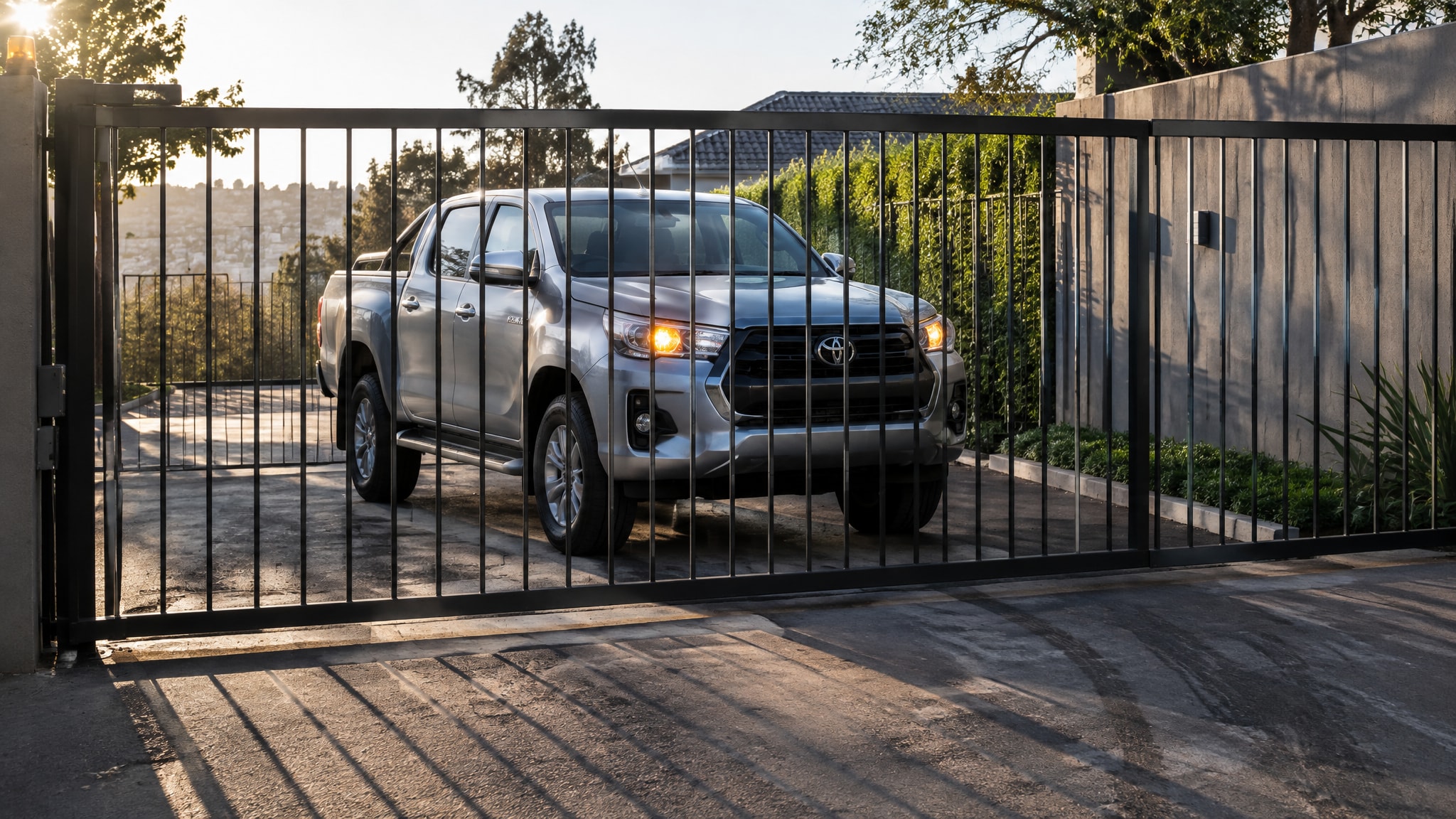
A look along the street before you turn in is the habit that matters most. If a car is lingering or someone is loitering near your gate, drive past and circle the block. Once you are in, wait until the gate has closed behind you before you open your door.
At robots after dark, leave a gap to the car ahead so you can steer around it and pull away if you need to. Keep your doors locked, your windows up and your phone out of your hand.
If you think you are being followed, don't drive home. Head for a busy, well-lit place such as a fuel station forecourt or a police station, and stay in the car until you feel safe.
The blue light scam and what to do instead
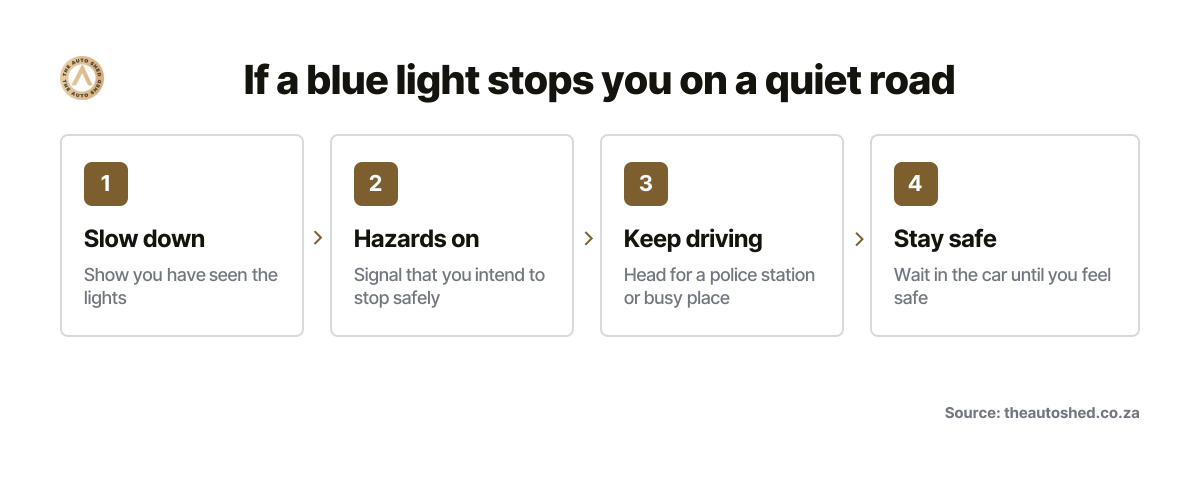
Picture a quiet road at night. An unmarked car behind you flashes its lights and signals you to stop. Slow down, switch on your hazards so the driver knows you have seen them, and keep going to a police station or a busy, well-lit public place. A genuine officer will follow you there without fuss.
Trackers, immobilisers and early-warning systems
A tracker does not prevent a hijacking. It helps recovery, because your provider can follow the vehicle's location and work with SAPS to find it. An immobiliser stops the engine starting without the right key, and an early-warning system alerts you or a control room that something is wrong.
These tools add to good habits and never replace them. When you buy, run a VIN check on any used car and ask what security is fitted. Every Autoshed Approved car is Dekra-inspected with a verified service history before it reaches you, and we are glad to talk you through the security options.
What to Do if You Are Hijacked: Staying Safe, Reporting and Your Insurance Claim
Don't resist. A car can be replaced and you cannot, so keep your hands visible, move slowly and do what you are told.
Take in what you can without staring: descriptions of the people, the direction they leave in and the vehicle they used. Those details matter to the police later, and they are easy to lose once the shock sets in. Once you are somewhere safe, write them down.
Then report the hijacking to SAPS and to your tracking provider straight away, because a quick report gives them the best chance of recovering the vehicle. Notify your insurer next. Comprehensive cover typically includes theft and hijacking, but the policy wording decides, and some policies require a tracker, so read yours before you need it. If you are unsure whether you are covered at all, read what happens if you are uninsured.
Buying your next car? Every car at The Auto Shed has a verified history, and our insurance partner can quote cover that includes theft and hijacking. Browse our pre-owned vehicles or WhatsApp us on 077 600 5558. We arrange finance through the major banks and deliver nationwide. If a vehicle isn't good enough for our family, it isn't good enough for yours.
Frequently asked questions
What time do most hijackings happen?
Tracker's latest data shows hijackings cluster on weekdays between 16:00 and 21:00, when people are driving home.
Which province has the most hijackings?
Gauteng records the most: 58% of all carjackings in the latest SAPS quarter. Tracker's data shows Gauteng and KZN together account for about 80% of the vehicle crime it records. If you drive in either province, build a driveway and robot routine into your week.
Does insurance cover hijacking?
Comprehensive cover typically includes theft and hijacking. Check your policy wording, including any requirement to have a tracker fitted, and notify your insurer once you have reported the incident to SAPS.