
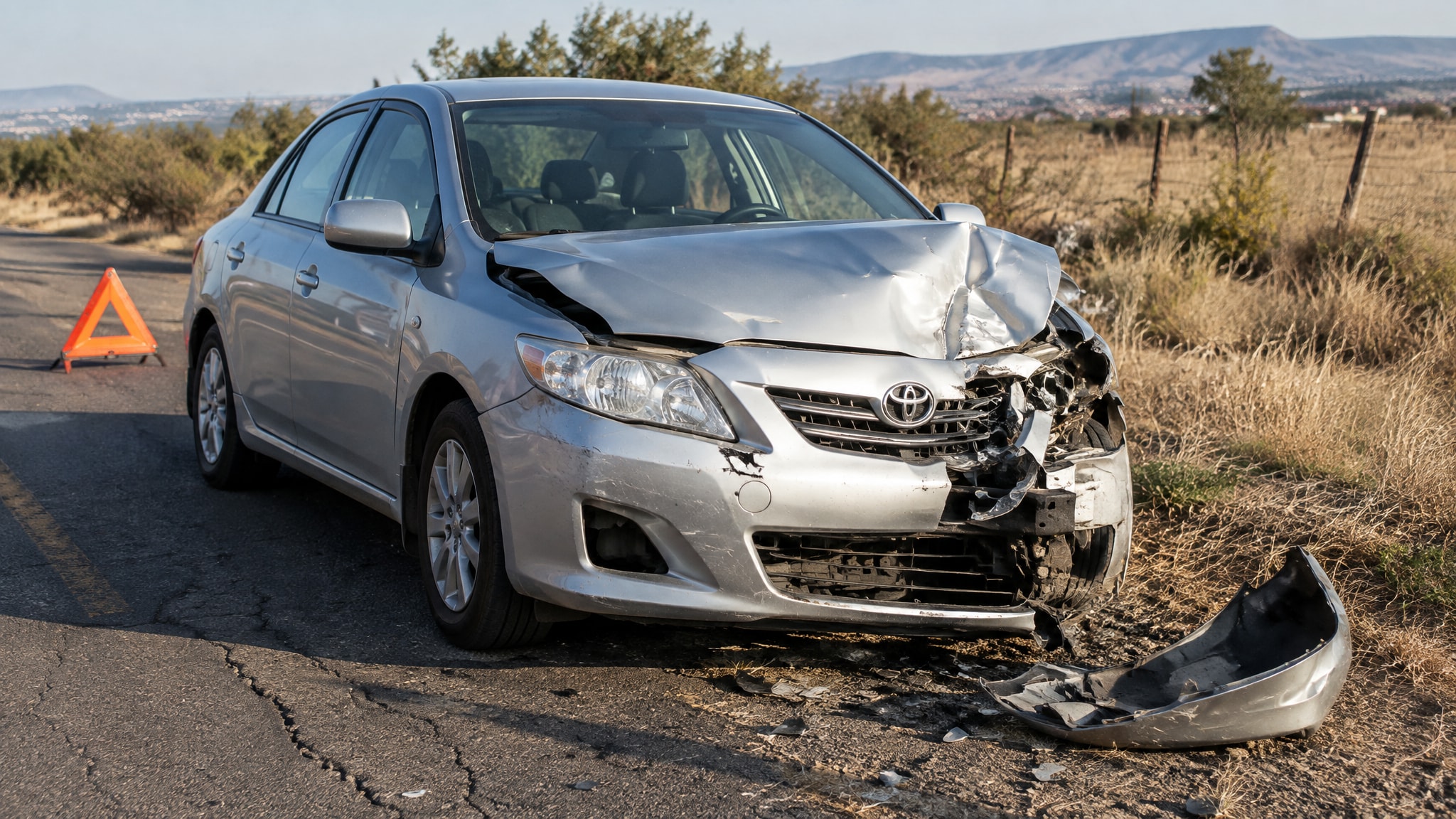
Being hit by a driver with no insurance is stressful in a particular way. The damage is bad enough, but so is the worry that nobody will pay for it. Your options are clearer than they feel at the roadside, and what you do in the first hour shapes most of what follows.
Uninsured driver accident in South Africa: the first hour at the scene
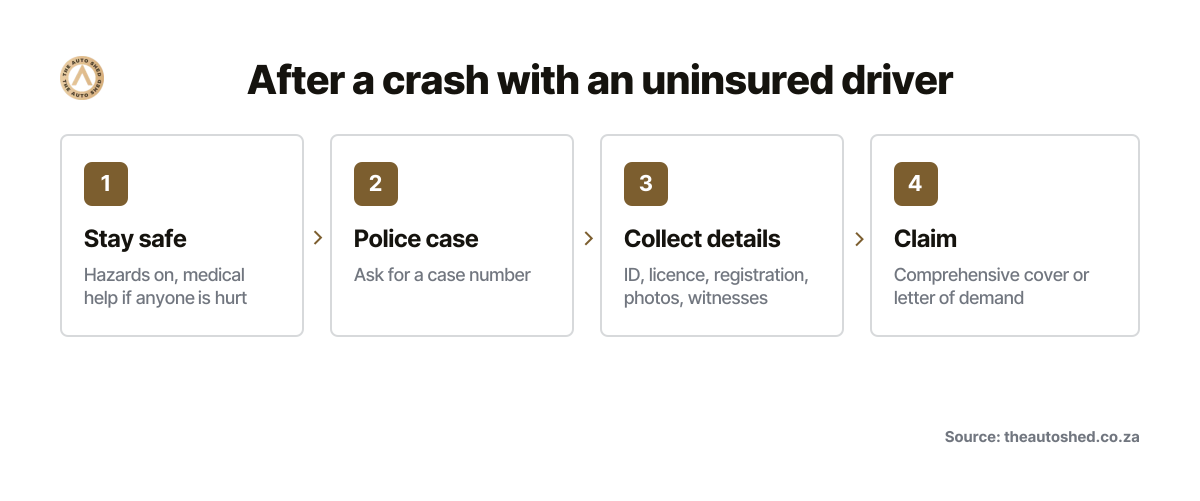
Safety comes first. Switch on your hazards, move people out of harm's way and call for medical help if anyone is hurt, even if the injury looks minor. Then call the police. If they don’t come out, which is common when no one is hurt, you must report the accident at a police station within 24 hours. Ask for the accident report (AR) number, because every later claim leans on it.
Fault is for the police and, if it comes to it, a court to decide, so keep the conversation at the roadside calm and factual.
What to collect before anyone leaves
An uninsured driver gives you no insurer to call, so the details you gather are your only trail to them. You need the other driver's full name and ID number, their licence details, the vehicle registration, make and model, and a phone number and home address.
Photograph the damage to both cars from several angles, along with the number plates and the layout of the road. Take the names and numbers of any witnesses before they drive off, since people are hard to find once they have left.
Who pays for what: the Road Accident Fund and your own cover
Two separate sources of money are involved after a crash, and confusing them is the most common mistake. One deals with people, the other with your car.
Injuries and the Road Accident Fund
The Road Accident Fund, funded through the fuel levy, compensates people injured or bereaved through negligent driving, and it does not matter whether the at-fault driver had insurance. It is not a repair fund, so it will not pay for damage to your vehicle.
Claims have strict time limits and set procedures. If you or a passenger was hurt, speak to the RAF or an attorney soon after the accident to confirm the current deadlines instead of relying on what a friend remembers.
Damage to your car and your insurer
Vehicle damage runs through your own comprehensive cover, or directly against the at-fault driver. Yes, you can claim on your own policy even when the other driver has no insurance at all.
Picture a typical case. A driver is rear-ended at a Centurion intersection by a motorist without insurance. She notes the registration, photographs both cars, opens a police case and claims on her comprehensive cover. Her insurer then pursues the at-fault driver for the cost of the repair.
Insurers can often pursue the at-fault party afterwards, but your excess may still apply upfront while that happens, so read your policy wording and ask your insurer how it treats a claim where someone else is to blame. Insurers also look closely at the car itself, so it helps to understand how insurers assess claims when a car's condition is questioned.
If the car is written off while you still owe on it, the payout may not clear the balance. Read up on what negative equity means if your car is written off before you need it.
Claiming from the at-fault driver directly
If you have no comprehensive cover, the claim is yours to bring against the driver who hit you. Start with a letter of demand that sets out what happened, what the damage cost and by when you expect payment. Attach written repair quotes and your police case number.
If the driver ignores the letter, the small claims court handles claims up to R20,000 without a lawyer, and the Magistrate’s Court deals with larger amounts. For a larger claim, take legal advice before you file.
We would rather be honest than encouraging here. A court order does not put money in your account, and recovering it from someone who could not afford insurance can be slow and uncertain.
Why so many drivers are uninsured, and how to protect yourself before it happens
The Automobile Association estimates that between 65% and 70% of vehicles on South African roads are uninsured. In other words, if you’re in a crash, there’s a good chance the other driver has no cover, so you can’t count on them to pay.
You can reduce the risk before anything happens:
- Carry comprehensive cover rather than the bare minimum.
- Ask your insurer whether it offers an excess waiver or excess reducer, and how it handles claims when the other driver is uninsured.
- Keep the car roadworthy, since a mechanical fault can give an insurer grounds to query a claim.
- Stay on top of keeping your licence disc current.
Our team has more than 28 years of combined motor industry experience, and we regularly see how accident history and insurance gaps affect a car's value and its finance position. That is why every vehicle we sell goes through the Auto Shed Approved inspection, and why we are open about a car's history. If a vehicle isn't good enough for our family, it isn't good enough for yours. You can also read what a Dekra report covers on a used car to know what to ask any seller.
Take ten minutes this week to read through your own policy. When you are ready for your next vehicle, talk to the Auto Shed family about a transparently vetted, Auto Shed Approved car.
Frequently asked questions
Does the Road Accident Fund pay for my car to be repaired?
No. The Road Accident Fund compensates people who are injured or bereaved through negligent driving, not vehicle damage. Repairs go through your comprehensive cover or a claim against the at-fault driver.
Can I claim on my own insurance if the other driver has none?
Yes, provided you have comprehensive cover. Your excess may apply upfront, and your insurer can often pursue the at-fault driver afterwards.
What if I have no comprehensive cover and the other driver won't pay?
Send a letter of demand with written repair quotes and your police case number. If that fails, the Magistrate's Court or small claims court is the next step, and a larger claim is worth taking to an attorney.