
A used car can look spotless and still carry a story the seller leaves out. A VIN check in South Africa takes an afternoon and lets you hear that story before a deposit leaves your account. We bring 28+ years of combined motor industry experience to this advice, which is why we tell every buyer to verify the paperwork, not just the car.
Where to Find the VIN Before You Run a VIN Check in South Africa
The VIN, or vehicle identification number, is a unique code stamped into the car at the factory. Think of it as the car's fingerprint.
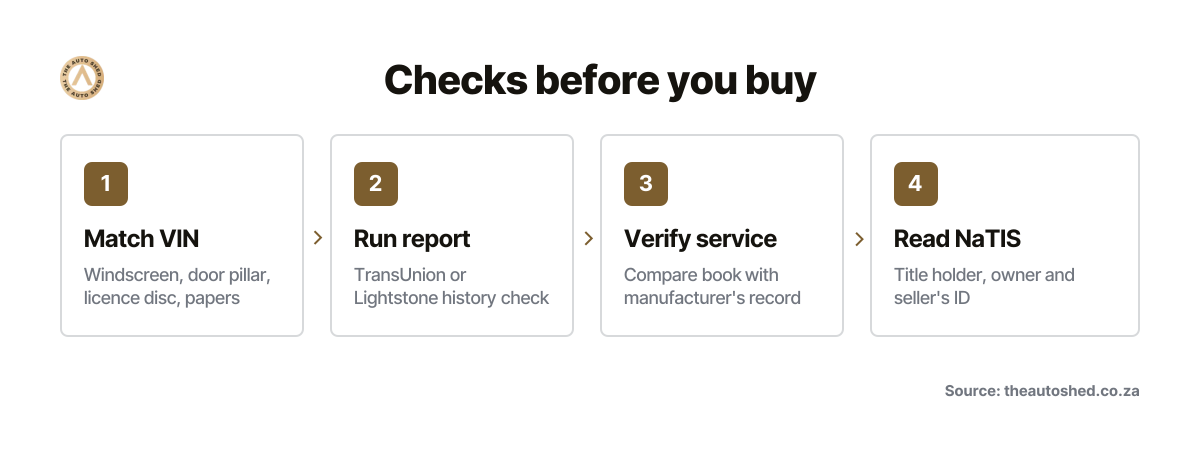
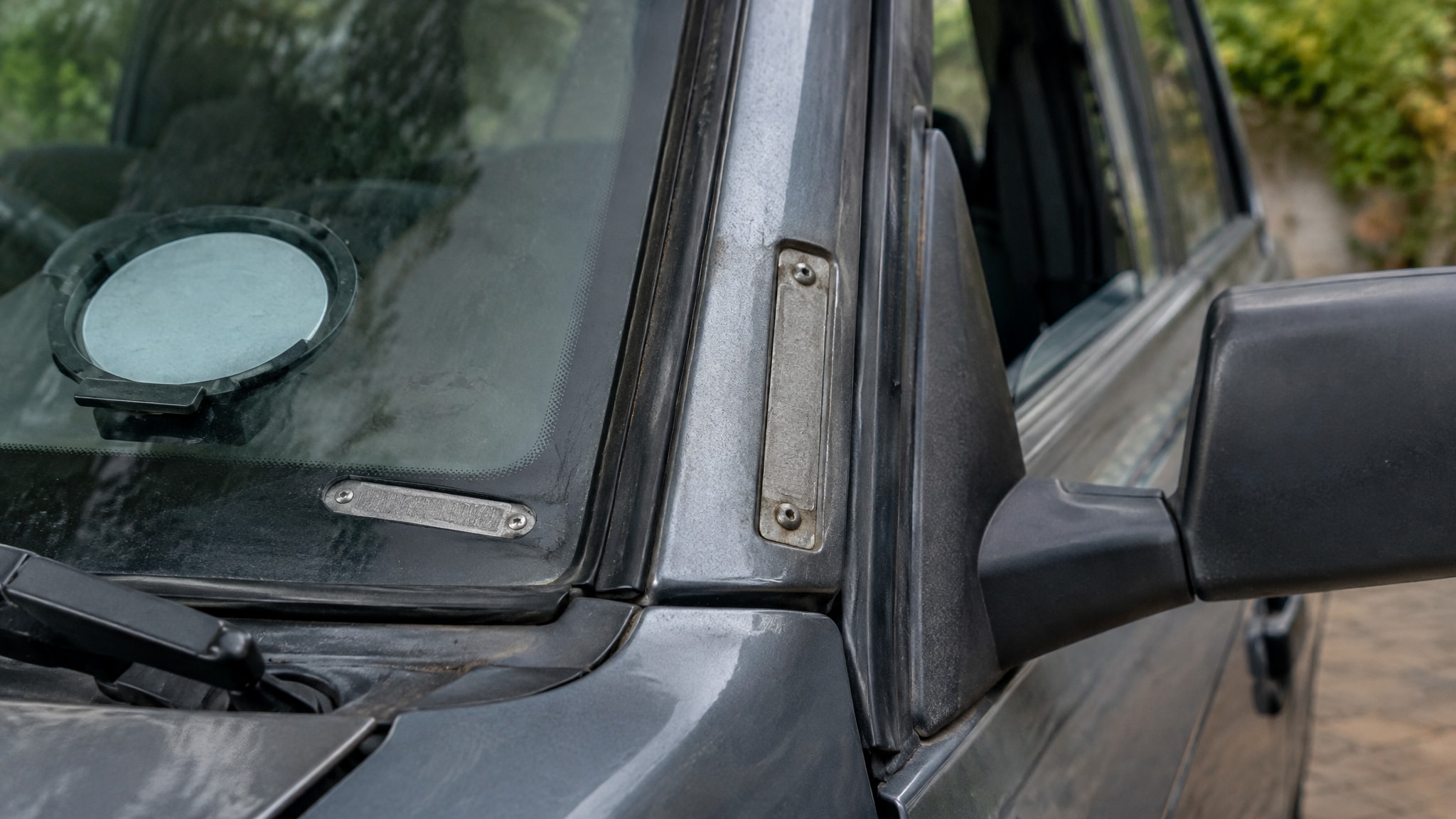
You will find it in four places: at the base of the windscreen, on the door pillar, on the licence disc and on the registration papers. Compare all four before you pay for any report, because a report on the wrong number tells you about a different car.
If the numbers differ anywhere, stop. That is the first thing to look for when you learn how to spot online car scams.
What a Car History Check Shows
TransUnion and Lightstone are the established providers of vehicle history data in South Africa. You give them the VIN, and the report pulls together what banks, insurers and the licensing system have recorded against that car.
Finance owing, stolen status and mileage records
A history report flags whether the car still has finance owing, and whether it has been reported stolen or flagged. Yes, you can check for outstanding finance this way, without relying on the seller's word.
If the report shows finance, ask for a settlement confirmation from the bank before any money moves. The seller may be perfectly honest, but the bank, not the seller, decides when the debt is cleared and the car is free to sell.
Mileage records are the third check. Compare the recorded readings with the odometer, and weigh both against the average kilometres per year for a car that age. A jump downwards between readings needs a proper explanation.
Accident and write-off status, including Code 3
The report also shows accident and write-off history. A Code 3 car is one an insurer wrote off as uneconomical to repair, which was then rebuilt, cleared by the SAPS and re-registered. The status stays on the NaTIS record permanently. A Code 4 car is permanently unfit and can never be licensed again.
A rebuilt car is not automatically a bad car, but you should know about it before you buy. If a Code 3 record appears on the report, ask the seller to explain it and to show proof of the repairs.
A history report is only as complete as the records behind it. It won’t catch damage that was never claimed, and some written-off cars stay registered as Code 2. You can also search the insurance industry’s free Vehicle Salvage Database for extra peace of mind.
Checking the Service History and the NaTIS Registration Certificate
Two documents deserve your full attention: the service record and the registration certificate. Both are easy to skim and expensive to get wrong.
Service stamps versus the manufacturer's digital record
A stamped service book is a good start, but stamps can be faked or filled in months after the work, sometimes all at once. A book with perfect, evenly inked entries and no invoices should make you slow down.
The manufacturer's digital record is harder to dispute, because the dealer network logs each service against the VIN. Ask the brand's dealer to confirm the history against the number you checked earlier, and compare it with the book.
If the car came with a plan, the record should also match its terms. Our note on service plan versus maintenance plan explains what that should look like.
Title holder versus owner on the NaTIS document
The NaTIS registration certificate lists the owner and the title holder, and they are not always the same party. The title holder is often a bank that still finances the car.
Picture a typical case. A seller presents a car, and the certificate names a bank as title holder. The seller says the loan is nearly paid off. Until the bank confirms settlement in writing, the car is not the seller's to sell, however friendly the handshake.
Check that the seller's ID matches the name on the papers, and that the VIN on the certificate matches the car. Our list of documents you need to buy a car covers the rest of the paperwork.
Why a Dekra Report Matters and How We Check Every Auto Shed Approved Car
A history check covers the paperwork. A Dekra inspection covers the physical car: brakes, tyres, steering and the other things that decide whether it is roadworthy today. You need both, because a clean record can sit on a car with worn components, and a sound car can come with a troubled record.
If you want the detail, here is what a Dekra report covers.
Every Auto Shed Approved car goes through a Dekra roadworthy inspection and a verified service history check before it is listed. That is our standard process, not an extra. If a vehicle isn't good enough for our family, it isn't good enough for yours.
Over 70% of our business comes from repeat customers and referrals, and we would rather earn that than win a quick sale. You can do this homework yourself with the steps above, or you can let us do it. Either way, there is no hard sell, and you can browse our Auto Shed Approved vehicles whenever you are ready.
Frequently asked questions
How do I check the ownership of a vehicle in South Africa?
Ask to see the NaTIS registration certificate and compare the owner and title holder with the seller's ID. If a bank is named as title holder, get written settlement confirmation before paying.
How can I check a VIN number online?
Enter the VIN into a vehicle history report from a provider such as TransUnion or Lightstone. Match that number to the windscreen, door pillar, licence disc and registration papers first.
What should I do if the VIN does not match everywhere?
Do not pay for anything and do not proceed with the sale. A mismatch can point to a clerical error, but it can also point to a cloned or tampered car, so walk away unless the seller can prove otherwise.