
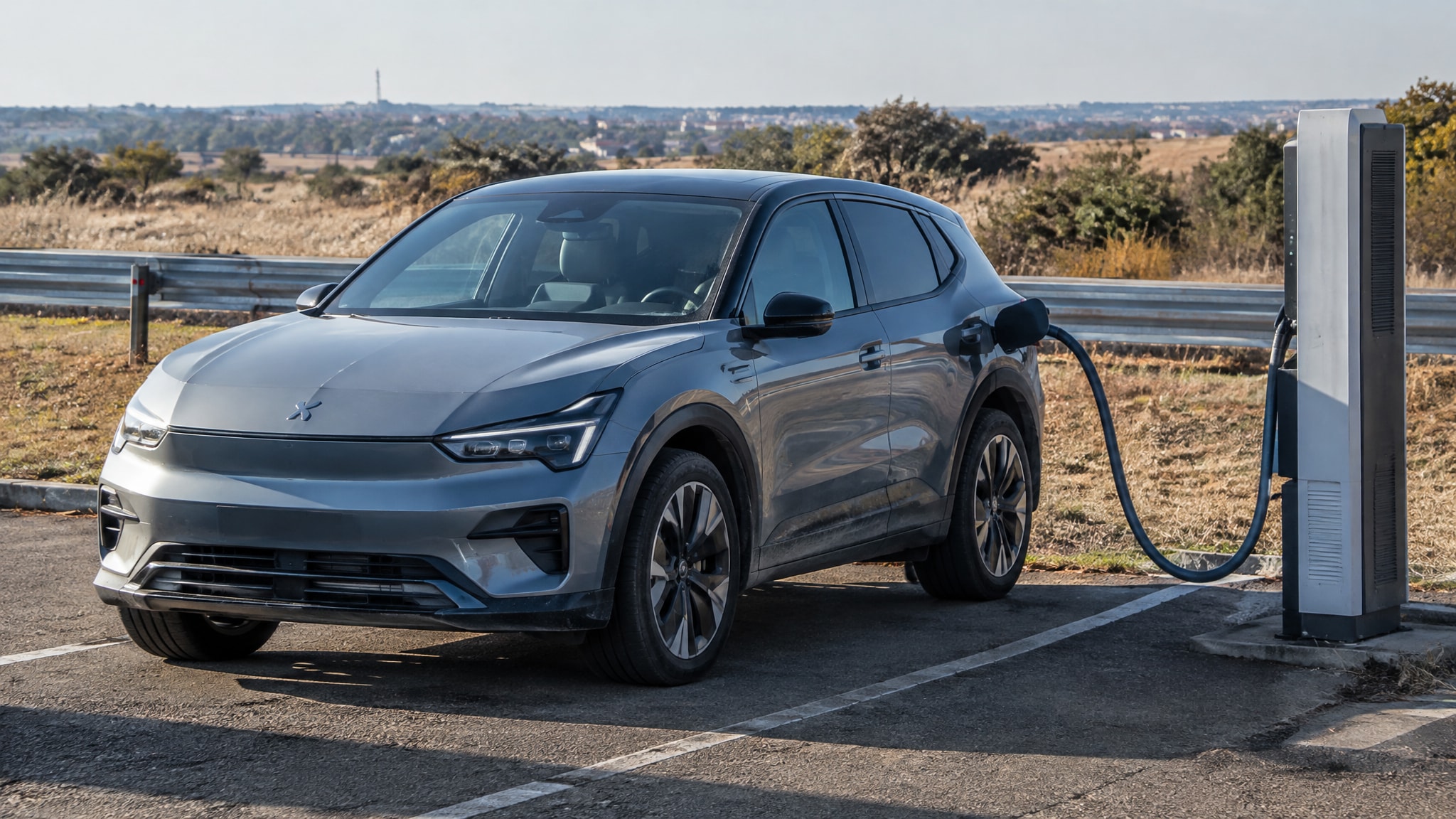
The question of whether an electric vehicle makes sense as a daily driver in Gauteng has moved from theoretical debate to practical reality for many South African motorists. Early adopters dealt with real infrastructure gaps. By 2026, the picture has changed enough that specific buyers can make the switch with confidence, provided they understand both what the technology can do and where it still falls short. We believe that transition deserves honest assessment rather than blind optimism, because your confidence behind the wheel matters more than chasing the latest trend. Is it realistic?
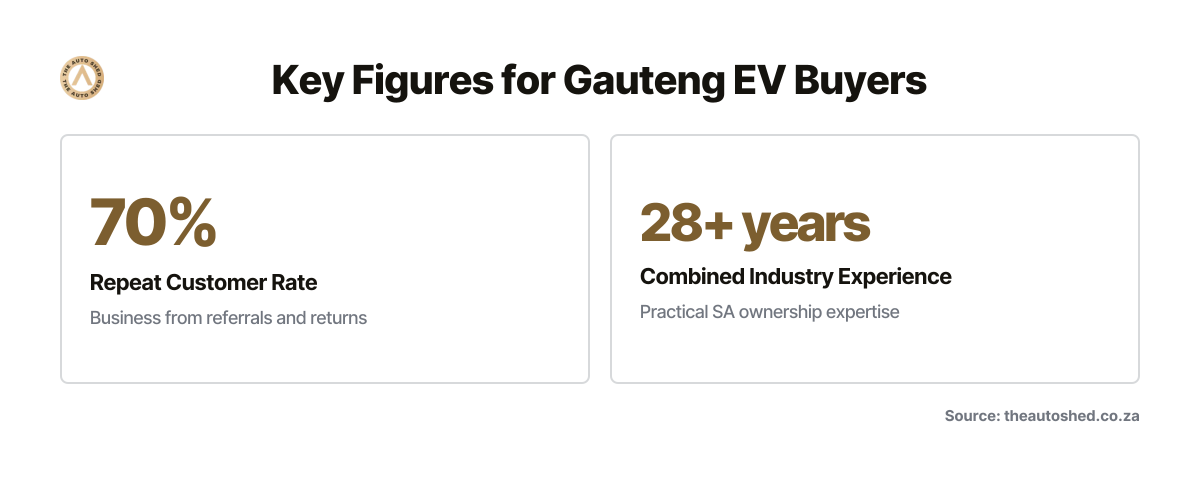
Our team brings 28+ years of combined motor industry experience to every EV assessment. That means advice grounded in practical South African ownership realities rather than theoretical specs, which matters most when evaluating pre-owned examples, where history counts as much as the spec sheet.
The Current State of Gauteng's Charging Infrastructure
Gauteng's major commuter routes, including the N1 Ben Schoeman and R21, now have multiple DC fast-charging stations along them. That makes daily EV use workable for residents in Centurion, Midrand and Sandton. You can run your regular commute without constantly watching the range meter, as long as you've checked you have charging access at both ends of the journey.
Public Fast-Charging Coverage Along Major Routes
Rapid chargers along the province's main economic corridors have reached a density where spontaneous travel within Gauteng is no longer an anxiety-inducing gamble. Installations at shopping centres and highway service stations mean a top-up during a routine stop takes minutes, not hours. Electric mobility is starting to fit into existing lifestyle patterns rather than dictating them.
Cross-province journeys still need deliberate route planning and a contingency buffer, something petrol drivers never have to think about.
Residential and Estate Charging Realities
Home charging is still the cornerstone of convenient EV ownership, but installation feasibility varies a lot across Gauteng's residential stock. Modern estates in Centurion often come with pre-installed infrastructure or a quick approval process. Older suburban properties may need substantial electrical upgrades before a wallbox can go in safely.
Check your home's electrical capacity before you buy. Retrofitting a single-phase supply to three-phase power can add significant, unexpected cost to the transition.
Real-World Range Versus Manufacturer Claims in SA Conditions
Official WLTP range figures are a useful baseline for comparing models, but they rarely account for Gauteng's summer heat and congested traffic combined. Your actual consumption will shift with air conditioning use, the elevation change between Johannesburg and Pretoria, and how much stop-start driving your commute involves.
Even with local conditions pulling efficiency below laboratory claims, most premium electric vehicles still comfortably cover an average daily return commute.
How Load Shedding and Heat Affect Battery Performance
High ambient temperatures force the battery's thermal management system to work harder, drawing energy that would otherwise move the car. Grid instability adds another layer: a scheduled overnight charge interrupted by load shedding can leave you with less charge than you expected come morning.
Vehicles with intelligent charge scheduling or solar compatibility offer real peace of mind during extended outages. You can align charging windows with reliable power availability instead of hoping the grid cooperates.
Typical Daily Commute Consumption in Johannesburg Traffic
Regenerative braking recovers energy during deceleration, which partly offsets the efficiency hit of frequent stopping in heavy traffic. Sustained idling in congestion while running the air conditioning, though, creates a drain that pure highway driving doesn't produce.
Expect real-world consumption to run 15 to 20% above manufacturer claims during summer months, when climate control demand stays high all day.
Total Cost of Ownership: Electricity, Insurance, Maintenance and Depreciation
Electricity tariffs have climbed steadily, yet the cost per kilometre of running on electrons is still well below petrol even at current Eskom rates. That operational saving gradually offsets the higher upfront price over a typical five-year ownership cycle, though exactly where the breakeven point falls depends on your annual mileage and your tariff structure.
Model your own savings against your actual consumption data rather than trusting a generic calculator built on idealised conditions.
Comparing Fuel Savings Against Premium Purchase Prices
The price premium on used electric vehicles reflects battery value and demand from buyers after fuel cost certainty. Depreciation curves are settling down as the market matures, but early-generation models can still carry valuation uncertainty that affects financing terms and trade-in values. Early adopters have suffered severe depreciation , accelrated by newer models being launched with more sophisticated battery technology , often at the same or lower prices than the outgoing models . This does not discount the value proposition that eminates from good quality pre-owned examples at low prices.
Pre-owned EV buyers should budget for battery state-of-health certification as a mandatory line item, equivalent in importance to an engine compression test on a traditional vehicle.
Service Plans and Battery Warranty Considerations
Maintenance costs drop substantially without oil changes, spark plugs or complex transmission servicing, freeing up budget elsewhere. Brake wear also decreases thanks to regenerative braking, which stretches component life well past conventional intervals.
Battery warranty transferability varies by manufacturer and depends on how much coverage is left, so check what protection carries over to a second owner before you finalise anything.
Which Used EV Models Make Sense for Gauteng Buyers?
Established European and Japanese brands currently offer the most secure ownership proposition, thanks to verified service networks and parts availability across Gauteng. Buyers who know what they're looking at often prefer these pre-owned examples, with documented local service histories, over newer Chinese entrants, even with the latter's attractive pricing, simply because the long-term support infrastructure isn't proven yet.
We prioritise models where specialist knowledge exists at dealerships like ours, so your vehicle gets competent care throughout its life.
Premium Sedans and SUVs With Proven Local Support
Models from Mercedes-Benz, BMW and Audi benefit from extensive dealer networks and independent specialists who understand their specific high-voltage architecture. These cars typically come with comprehensive service records, which makes it possible to properly assess battery degradation and system health before you buy.
Parts availability for premium European EVs has normalised enough that routine maintenance no longer means long waits or cross-border sourcing delays.
Entry-Level Options That Punch Above Their Weight
Certain compact electric vehicles offer surprising capability for urban commuters who rarely leave Gauteng's metropolitan boundaries. These smaller platforms give up some range and charging speed, but deliver enough daily utility at a lower price, which makes them a sensible first step into electric mobility.
Check that any entry-level model has thermal management sophisticated enough to handle local summers without excessive battery degradation over time.
Critical Pre-Purchase Checks for Second-Hand Electric Vehicles
Battery state-of-health testing is non-negotiable, and it's a fundamentally different exercise from a standard mechanical inspection. It needs specialised diagnostic tools only available at approved centres. Our certified pre-owned inspection checklist covers these high-voltage assessments alongside the traditional safety checks, because knowing the remaining capacity and the thermal management history is what actually determines a vehicle's value.
Over 70% of our business comes from repeat customers and referrals who trust our rigorous Autoshed Approved inspection process, which includes specialised EV battery health verification.
We apply the same uncompromising preparation standards to electric vehicles as our luxury ICE stock: if a vehicle isn't good enough for our family, it isn't good enough for yours. We decline inventory that can't pass transparent battery validation, even when that costs us short-term sales.
Spotting red flags goes beyond battery health. Our guide on avoiding common pitfalls helps you recognise warning signs in documentation, service history and previous ownership patterns that suggest hidden problems.
When an EV Might Not Be Your Best Option Right Now
Electric vehicles don't suit every driving pattern or living situation, regardless of how far the technology has come. High-mileage commercial users covering hundreds of kilometres daily between remote locations, or anyone without secure off-street parking for overnight charging, may still find a hybrid or an efficient ICE vehicle more practical in 2026.
That's part of our job as a trusted advisor: we'd rather help you choose the right solution than sell you the wrong one.
If your circumstances make full electrification premature, our guide to fuel-efficient alternatives can still cut your running costs while keeping the flexibility your current lifestyle needs. The technology keeps moving, and what looks impractical today may make sense within your next ownership cycle.
Making the Transition With Confidence Through Trusted Partners
EV ownership in Gauteng works for informed buyers who put verified quality ahead of speculative bargains and understand both the opportunities and the constraints of current infrastructure. It's the same measured approach that keeps our repeat customer base at over 70%, built on transparency rather than transactional pressure.
A personal consultation lets us work out whether electric mobility suits your commuting pattern, your home charging capability and your budget before you commit any capital. View our hand-selected EV inventory or get in touch to talk through what suits you, because a confident decision comes from an honest conversation, not generic advice.
Frequently Asked Questions
Can I rely solely on public charging if I live in a flat without a garage?
Relying exclusively on public charging is technically possible but practically demanding, as you must plan your week around charger availability and potential queues. Most successful flat-dwelling EV owners negotiate shared charging arrangements with their body corporate or employer before purchasing. Without guaranteed overnight access, a plug-in hybrid may offer better daily convenience until dedicated infrastructure becomes available.
How much range should I realistically expect from a used EV in Gauteng summers?
Expect real-world range to fall fifteen to twenty percent below official WLTP figures during hot months when air conditioning runs continuously and battery cooling draws additional power. A vehicle rated for 400km might deliver 320-340km in January traffic, though milder winter months often see efficiency closer to claimed specifications. Always size your battery buffer around worst-case summer consumption, not annual averages.
What happens to my EV's battery warranty when I buy it second-hand?
Manufacturer battery warranties typically transfer to subsequent owners automatically, but remaining coverage period and kilometre limits continue from the original purchase date rather than resetting. Some brands require documented service history at approved centres to honour warranty claims, making pre-purchase verification essential. Always obtain written confirmation of transferable warranty status before finalising your purchase.
Is it worth buying a used EV if I only drive 30km per day?
Short daily commutes are ideal for electric vehicles because they stay well within comfortable range margins and allow frequent shallow charging that preserves battery health. Your fuel savings will be modest compared to high-mileage drivers, but maintenance reductions and elimination of cold-start emissions still deliver meaningful benefits. The financial case strengthens further if you have access to cheap overnight electricity or solar generation.