
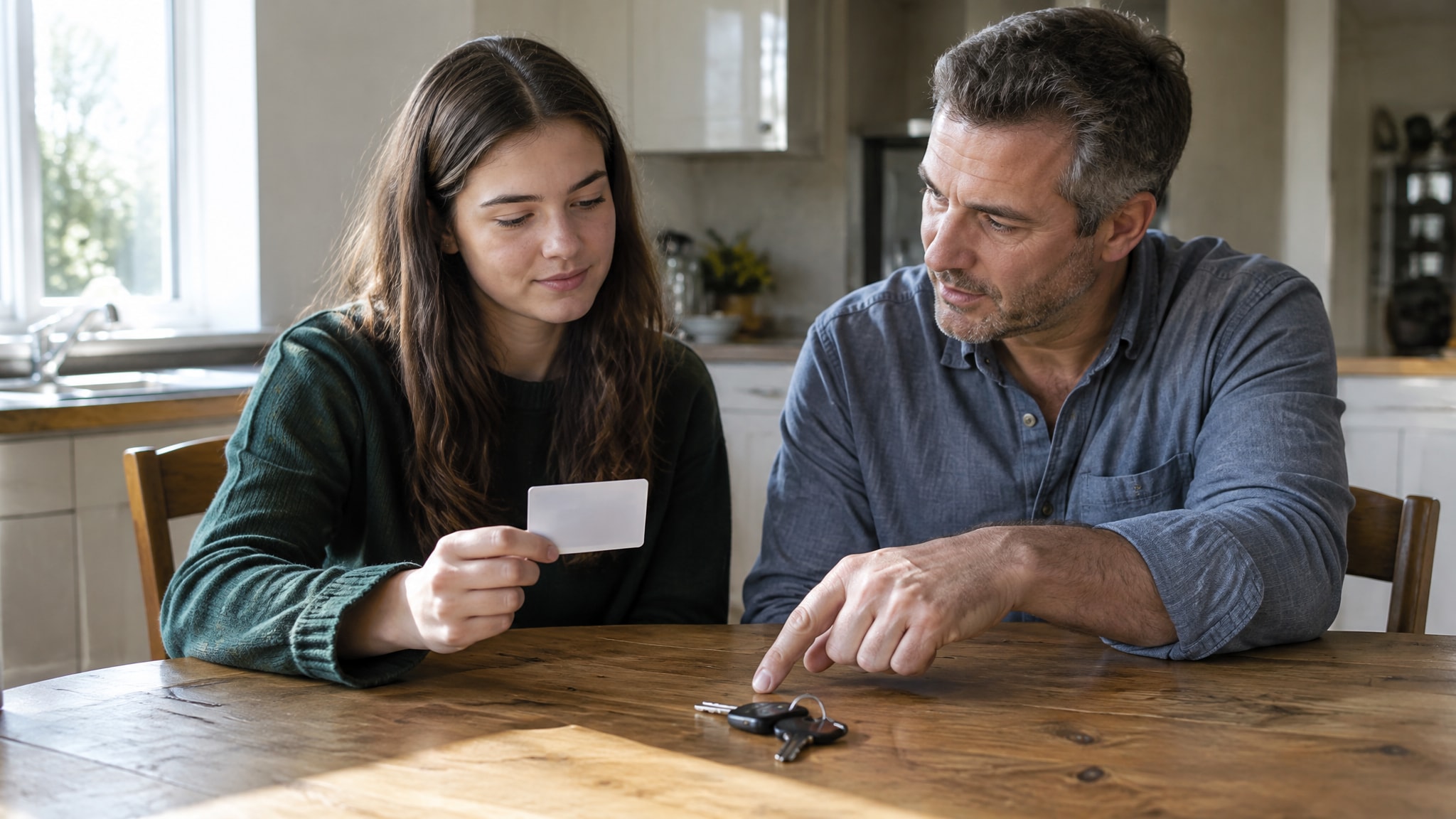
Matric finals end, and the question at most family tables is the same: when can the driving start? The road from a learner's licence to a first car has a clear order, and getting each step right makes the next one cheaper and calmer.
We've helped many families through this. More than 70% of our business comes from repeat customers and referrals, so we think of a first car as the start of a long relationship, not a one-off sale.
Getting your learner's licence: age, booking and what to bring
Everything begins with the learner's licence. It is the first official step, and it is worth doing properly.
Minimum age and booking your test
You can apply for a learner's licence for a car from 17, and a full driving licence follows from 18. The age limits, booking steps, fees and how long a learner's licence stays valid are set by the authorities and do change, so confirm them on the RTMC and eNaTIS sites before you book anything.
Booking is done through the official channels, and a slot at a testing centre can take a while to come up. If your child turns 17 soon, book early rather than waiting for the birthday.
A learner's licence does not let you drive alone. A licensed driver must sit beside you every time you take the wheel, so parents should plan to be in the passenger seat for a good while.
What the test covers and what to bring on the day
The learner's test is theory. It covers the rules of the road, road signs and the controls of a vehicle, so you are tested on knowing the road before you are tested on driving it.
Your ID and the other documents named on your booking confirmation go with you. Read that list the night before, because a missing document means a wasted slot and a fresh wait. You will also pay a test fee, which you should check on the official sites rather than trust a figure passed along by friends.
From learner's licence to driving licence: lessons and the K53 test
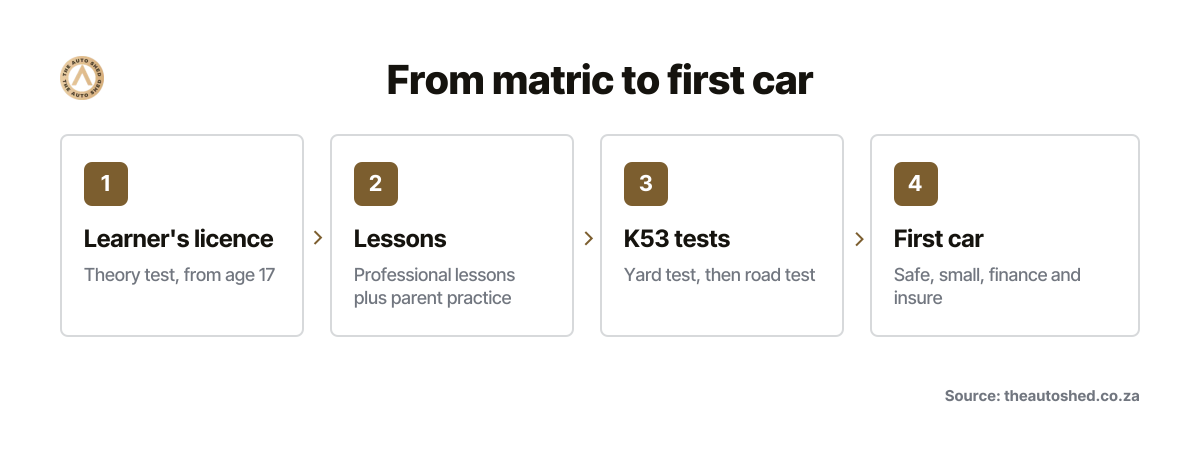
Once the learner's licence is in hand, the real work starts. The driving licence comes after the practical K53 test, which has two parts on the same day: a yard test, where you show control of the car at low speed, and, once you pass that, a road test in traffic.
Professional lessons matter here because a good instructor teaches exactly what the examiner looks for, and a parent in the passenger seat rarely knows that. Parents are still invaluable for the hours of practice in between, since you build confidence by driving the same quiet roads again and again.
Once the licence arrives, take an evening to learn how AARTO demerit points work. A new driver should know the rules before the first fine does.
Choosing a first car: safety and low running costs
If a vehicle isn't good enough for our family, it isn't good enough for yours. That is the standard we apply to every car we sell, and it matters most when the driver is new.
Before you shortlist, settle the budget. Our practical car budget guide is a sensible place to start, because the purchase price is only part of what a first car costs.
What to look for: ABS, airbags and a small engine
Safety comes first. Look for ABS brakes and airbags, because a new driver will brake hard in a surprise at some point, and these features are what help the car respond.
After safety, think about the monthly bill:
- Fuel economy: a small engine sips fuel, and a student will notice that every week.
- Service costs: common parts and simple mechanicals keep workshop bills low.
- Insurance: modest cars are usually cheaper to cover than anything fast or flashy.
A small engine is not a sports car in disguise, so this approach suits a first car and does not suit a driver who wants performance. That can wait.
A car's history matters as much as its features. Every vehicle we sell is Auto Shed Approved, with a Dekra roadworthy inspection and a verified service history, backed by 28+ years of combined motor industry experience, so we check the things a family cannot easily see for themselves before we would recommend a car to a new driver.
Small hatches and compact SUVs worth shortlisting
Two categories suit most first-time drivers. Small hatchbacks are easy to park, light on fuel and cheap to run. Compact SUVs give a higher seating position and a little more room for a student's luggage, at a slightly higher running cost.
Either way, ask for the service history and an inspection report. If you want to see the hatch category side by side, a used small-hatch comparison shows what to weigh.
Financing and insuring a first car for a young driver
Most school-leavers cannot finance a car alone, so the question is how a parent helps. You have two routes, and they carry different responsibilities.
A parent standing surety, or buying in the parent’s name
If the young driver has an income, they can apply in their own name with a parent standing surety. That builds their own credit record, but surety makes the parent fully liable for the debt if payments are missed, so read the surety agreement carefully before signing. Without an income, the bank is unlikely to approve the application even with surety.
If the parent buys the car in their own name, the parent owns it, carries the account and is the insured party. That is simpler on paper, though the young driver then has no credit history of their own to show for it.
Whichever route you choose, have the paperwork ready first. Here is the documents needed to buy a car, so nothing delays the day.
Keeping young-driver insurance affordable
Insurers price risk, and a new driver is a higher risk. You can bring the premium down with choices that are well within your control:
- Pick a modest car rather than a fast one.
- Keep the driving record clean from the first day.
- Be honest about who the main driver is.
That last point matters most. Naming a parent as main driver when the child drives daily may look cheaper, but it can put a claim at risk. Read what happens if a driver is uninsured and you will see why cover must be right from the start.
Shopping for a matric gift? Browse our first-car picks at The Auto Shed, such as the Polo Vivo, Ford EcoSport and Renault Sandero, and arrange finance through the major banks. WhatsApp us on 077 600 5558. There’s no pressure, and we deliver nationwide.
Frequently asked questions
Can I drive on a learner's licence alone?
No. A licensed driver must sit beside you whenever you drive on a learner's licence. Driving alone only becomes legal once you pass the K53 tests and hold a full driving licence.
What is the best first car for a student?
A small hatchback or compact SUV with ABS, airbags and a small engine is a sound choice. It keeps fuel, service and insurance costs down, and a vetted history matters more than any single badge.
What happens after I pass the learner's licence test?
You practise with a licensed driver, ideally alongside professional lessons. When you are ready, you take the K53 yard test and then the road test for your driving licence, from age 18.