
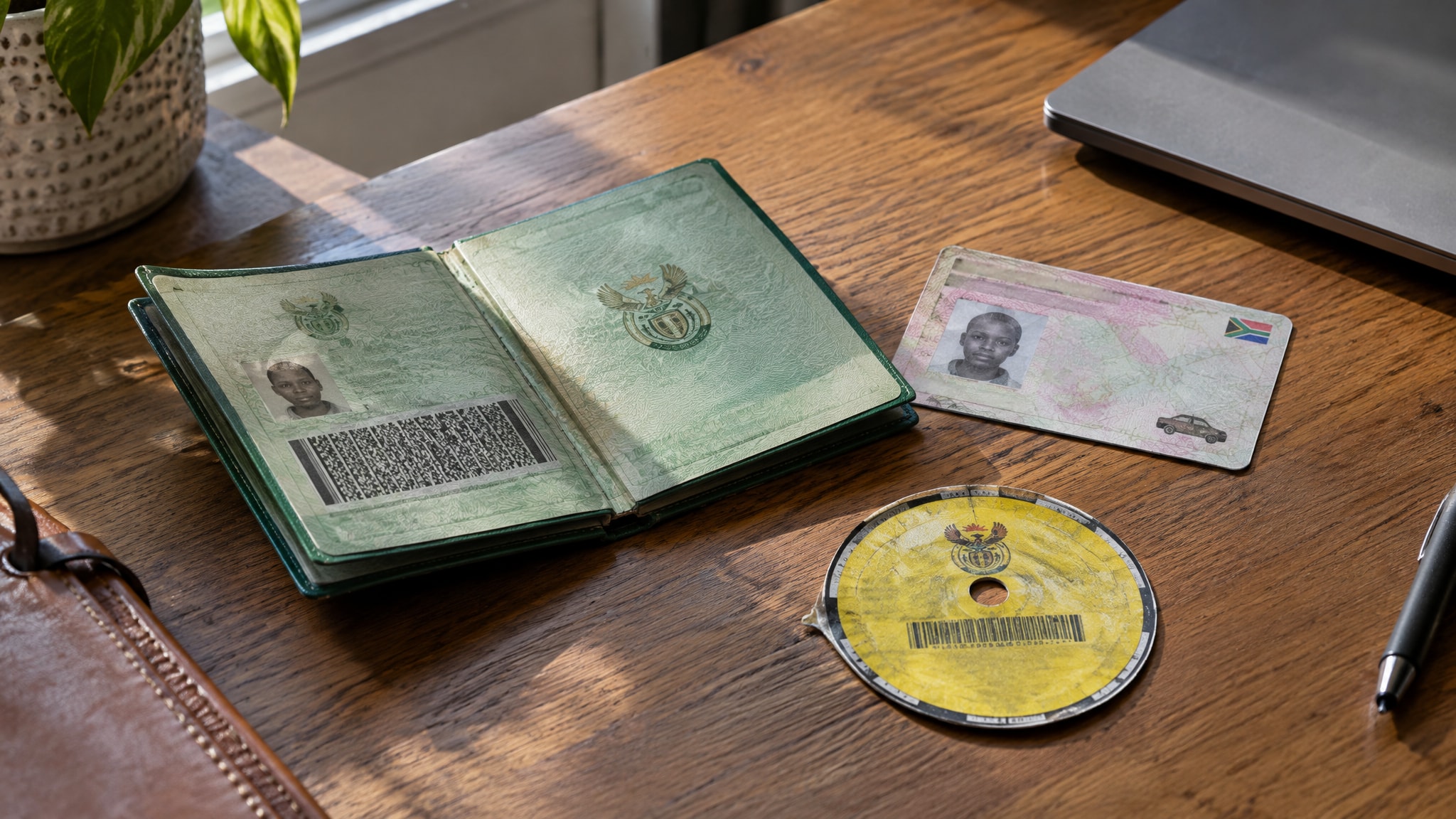
Most buying problems start long before the test drive. They start with a missing page, a mismatched name or a seller who "will find the papers later". With 28+ years of combined motor industry experience between us, we have seen how often a good car turns into a bad deal because of incomplete paperwork.
This checklist covers the documents needed to buy a car in South Africa, whether you are buying from a dealer or a private seller. It is general guidance, not legal advice, so confirm any detail with your local registering authority if your situation is unusual.
Documents Needed to Buy a Car in South Africa: The Short Version
Think of the paperwork in three groups. Each has a different owner, and you should know which is which before you hand over any money.
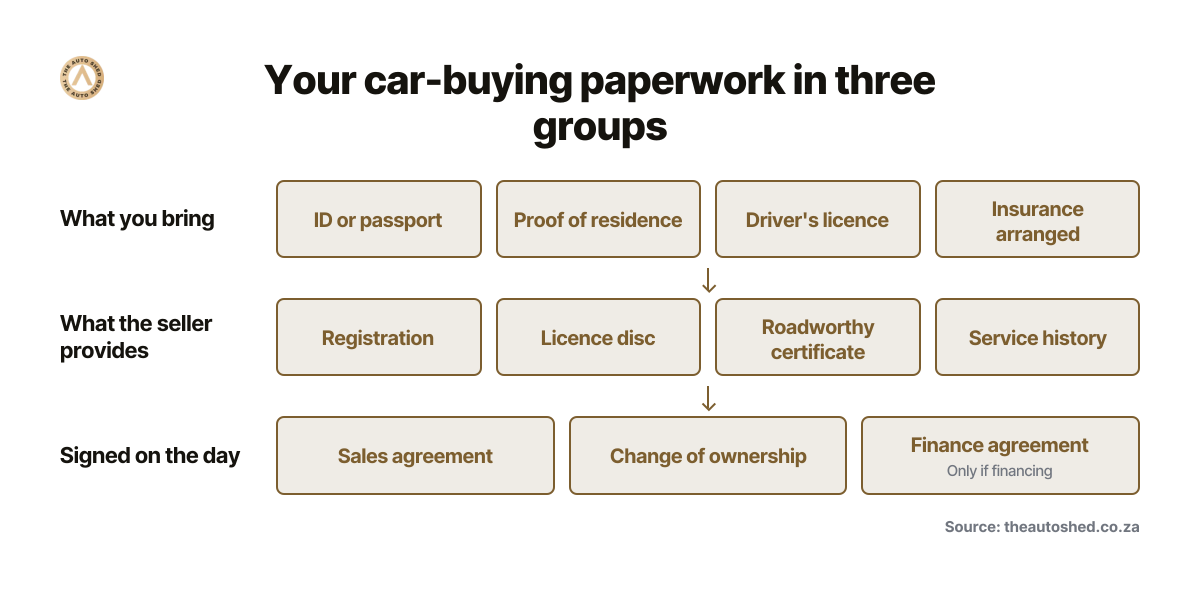
What you bring
- South African ID, or your passport and valid permit if you are a foreign national
- A recent proof of residence
- Your driver's licence
- Proof that insurance is arranged
What the seller provides
- The vehicle registration certificate
- The current licence disc
- A roadworthy certificate
- Service history
- A settlement letter, if the car is still under finance
What is signed on the day
- A written sales agreement or invoice
- The notification of change of ownership
- A finance agreement, if a lender is involved
Dealer and private purchases differ here. A dealer normally prepares most of the seller's documents and handles admin for you, while in a private sale you chase each item yourself. Finance adds its own stack, which we cover further down.
What You Need to Bring as the Buyer
The seller has to know who they are selling to, and a lender or the registering authority will want the same proof. Bring originals and one set of clear copies, because most sellers will ask for both.
Proof of identity and residence
A South African buyer brings a green barcoded ID book or smart ID card.A foreign national brings a valid passport and a valid permit or visa, because the registering authority and the seller both need to confirm you may lawfully own and register the vehicle. Before the car can be registered in your name, you’ll also need a Traffic Register Number (TRN) certificate, which you apply for at a registering authority, so sort this out early.
Proof of residence should be recent. A utility bill, bank statement or municipal account in your name usually works, and the address should match the one you will register the car under.
If the address on your ID is old, tell the seller early. Fixing it after you have paid costs time.
Driver's licence and proof of insurance
Your driver's licence is needed for the test drive, since a seller or dealer will not hand over keys without seeing it. It also confirms you are legally allowed to drive the car home.
Insurance is the one document buyers leave too late. The moment you take ownership, any damage or theft is your problem, so arrange cover before you drive away rather than on Monday morning. Most insurers will want to confirm the vehicle and the owner, so ask yours what they need, and have the invoice or registration details to hand.
The honest answer on registration papers is that you rarely need the new certificate in your name to get cover started. You do need enough paperwork to identify the car and prove you are buying it.
Documents the Seller Must Hand Over
This is where deals are won or lost. Every document below protects you in a specific way, so treat each one as a check on the car, not a formality.
We advise treating three of them as non-negotiable: the registration certificate, the roadworthy certificate and the signed sales agreement. If any is missing, the deal waits.
Registration certificate, licence disc and proof of ownership
The vehicle registration certificate is the car's identity document. It records the registered owner, the VIN and the engine number, and it is the main proof of who has the right to sell. The seller's name and ID number must match what is printed on it, and both must match the person standing in front of you.
A typical case: a buyer is ready to pay for a well-priced SUV, and the seller's surname on their ID differs from the name on the registration certificate. It might be an innocent change after marriage, or the seller might be selling on behalf of someone else. Either way, we would pause the deal until it is explained in writing, because you cannot safely buy from someone the paperwork does not name.
Check the VIN and engine number on the car against every document, not only the certificate. Do this before you pay, in daylight, with the paperwork in your hand.
The licence disc on the windscreen must be current. An expired disc is not a disaster on its own, but it tells you the seller has let admin slide and it means licensing fees are due before the car can be used legally.
Roadworthy certificate, service history and sales agreement
A roadworthy certificate is needed when ownership changes. It confirms the car met the required standard on the day it was tested, and it protects you from inheriting an unsafe vehicle that nobody has looked at in years. A certificate is a snapshot, so it does not replace your own inspection or a mechanic's opinion.
Service history tells the story the roadworthy cannot. Stamped books or dealer printouts show whether the car was maintained on time, and gaps are worth a conversation before you buy.
The written sales agreement or invoice ties it together. It should name both parties, describe the car by make, model, VIN and engine number, state the price and record the date. Without it, you have no record of what was promised.
Our own approach is to hand buyers a complete vehicle file. It typically includes the service history and the inspection record from our Autoshed Approved process, so nothing about the car is left for you to piece together later. Over 70% of our business comes from repeat customers and referrals, and we put much of that down to this habit.
Settlement letter when finance is still owing
If the seller still owes the bank, they cannot freely pass on clean ownership. The financier is often the titleholder, and the car is effectively security for that debt until it is settled.
A settlement letter from the financier states what is owed and confirms the bank will release the vehicle once it is paid. Without it, you risk taking on someone else's debt, or being unable to register the car in your name. The safe route is to get the letter, check the details with the bank directly and arrange for the settlement to be paid before or as part of your payment.
You can also check whether a car is stolen or still under finance before you spend a cent on a deposit.
Extra Paperwork if You Are Financing the Purchase
A lender needs to confirm who you are, what you earn and that you can carry the instalments. The list below is typical, although each lender sets its own requirements, so ask early which documents they want.
Payslips, bank statements and proof of income
For salaried buyers, lenders usually ask for:
- Your most recent payslips
- Three months of bank statements
- Your ID
- Proof of address
Make sure the bank statements are complete and legible. Missing pages or cropped screenshots slow an application down more than almost anything else.
Our team can explain how vehicle finance approval works in more detail if you would like to see what lenders weigh besides income.
Self-employed and company buyers
Income is harder to prove without a payslip, so lenders ask for more. If you run your own business, expect requests for financial statements, tax records and bank statements that show consistent income. A company buyer typically adds company registration documents and details of the directors who will sign.
If you are self-employed, start gathering these before you choose a car. A well-organised file makes a lender's job easier, and it shows.
What happens after approval
Once the lender approves, you receive a finance agreement to read and sign. The lender then pays the seller, and the car is usually registered with the lender recorded as titleholder until the debt is cleared.
Your deposit sits alongside all this. A larger deposit reduces the amount you borrow, and it can affect how comfortable a lender feels. You can read how much deposit you may need for a second-hand luxury car.
Approval does not mean the car is cleared. You still need every seller document in the previous section.
Paperwork Red Flags That Signal a Risky Deal
Scammers and careless sellers leave a pattern. Whenever the paperwork makes you uneasy, pause, because a good car will still be there after you have asked a few questions.
Watch for these:
- Mismatched names or ID numbers. The seller does not match the registration certificate, which can mean a stolen car or a seller with no right to sell.
- A missing registration certificate. Without it, there is no proof of who owns the car.
- A seller who "lost" the papers. Sometimes true, but it is also the classic excuse when the car is under finance or not theirs.
- Pressure to pay before you see documents. A deposit should never come before you have inspected the paperwork.
- Photocopies only. You need to see originals.
- VIN or engine numbers that do not match. This is the most serious flag, and it can point to a stolen or tampered vehicle.
Several of these overlap with the tricks used in online adverts, so it helps to know how to spot online car scams before you travel to view a car. Our wider guide on how to avoid buying a bad used car covers the physical checks.
One flag alone does not always mean fraud, but two together should end the conversation.
Completing the Transfer: Ownership Change, Licensing and Insurance
Once you have paid, the order matters. Rushing the later steps leaves the car legally in the seller's name, which causes trouble if you pick up fines or have an accident.
Here is the sequence in plain terms:
- The sales agreement is signed and payment is made.
- The notification of change of ownership is completed and submitted.
- The car is registered in your name and licensed.
- Your insurer is told about the change, if cover was not already arranged.
The rules set a deadline of 21 days for both the seller's notification and your registration, so do not leave this until next month.
Notification of change of ownership and who signs what
The seller completes and signs the notification of change of ownership, and you complete the application to register the vehicle in your name. Both sides must sign where the forms require it, and each keeps a copy.
Until that notification is submitted, your best proof of ownership is the signed sales agreement or invoice, together with the seller's registration certificate. After registration, the new certificate in your name is the document that proves you own the car.
Licensing the car in your name
When the car is registered to you, you also pay the licence fee and receive an updated licence disc. Our licence disc renewal guide explains what to expect when it comes up again.
Tell your insurer the registration is complete. They will want the details to match the car's papers, so quote the VIN and your name exactly as printed.
A dealer typically handles much of this admin for you. With a private seller, you do it yourself, and you should keep copies of everything.
How a Dealer Handles the Paperwork for You
Buying from a dealer changes who carries the burden. Instead of chasing a private seller for a roadworthy or a settlement letter, you deal with one team that has already done the checks.
Here is how we approach it. Every vehicle goes through our Autoshed Approved inspection, and we hand you a clear vehicle file with the service history and inspection record. If a vehicle isn't good enough for our family, it isn't good enough for yours.
If you need finance, we can arrange it, and if you are buying from outside Centurion, we deliver nationwide. None of this removes your own diligence, so please still compare the VIN and engine numbers with the paperwork yourself, and we will happily stand with you while you do.
Once your documents are ready, you are welcome to explore our vehicle finance options or get in touch with our team. We are glad to talk through a purchase with you, with no pressure.
Frequently asked questions
How do I prove I own a car after buying it?
Straight after payment, your signed sales agreement or invoice and the seller's registration certificate are your proof. Once the car is registered in your name, the new registration certificate is the document that proves ownership. Keep copies of everything in a safe place.
Do I need the registration papers to get a car insured?
Insurers want to identify the car and confirm the owner, so have the invoice or registration details ready. You rarely need the new certificate in your name before cover starts. Ask your insurer exactly what they need, and arrange cover before you drive away.
Should I pay a deposit before I have seen the documents?
No. Ask to see the original registration certificate, roadworthy certificate and, if relevant, the settlement letter first. A seller who pushes you to pay before you have seen them is a red flag.
Is the paperwork different when buying from a dealer?
Yes, mainly in who does the work. A dealer normally prepares the seller's documents and handles much of the transfer admin, while with a private seller you gather and check each document yourself. You still need to compare the VIN and engine numbers to the papers in both cases.