
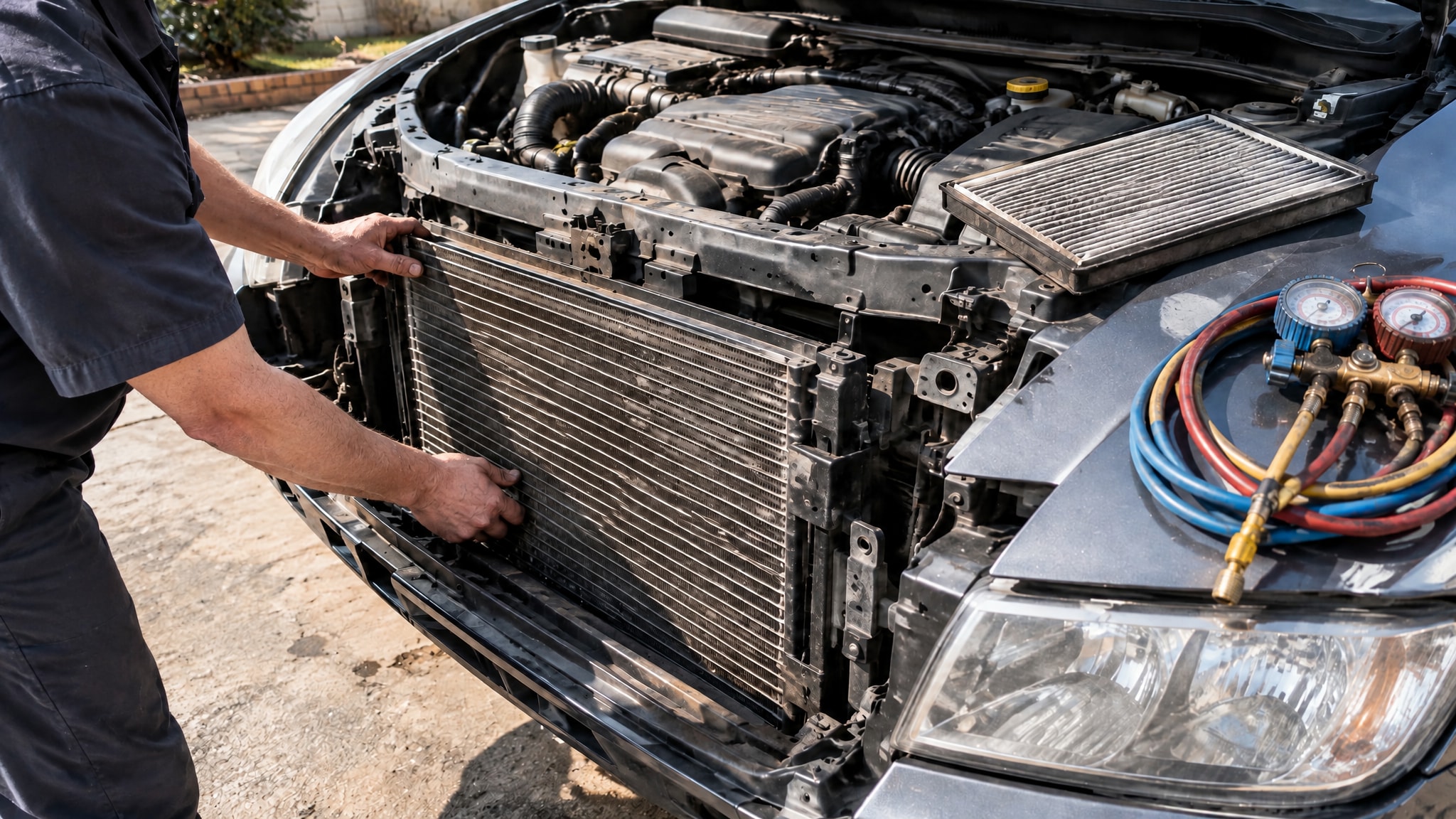
A car aircon that blows warm air is more than a comfort problem. It tells you something in the system has stopped doing its job, and on a Gauteng afternoon you notice it fast. We have spent 28+ years combined in the motor industry, and the same handful of faults turn up again and again. This guide helps you match what you feel to what is probably wrong, and shows which checks are safe to do yourself.
Why Your Car Aircon Is Not Cold: The Short Answer
Most of the time, a car aircon not cold comes down to one of five things:
Match the symptom to the likely fault
| Likely cause | Urgency | |
|---|---|---|
| Cool but not cold | Low refrigerant | Book soon |
| Warm in traffic | Condenser or fan | Check soon |
| Weak airflow | Cabin filter or blower | Check first |
| Clicking or grinding | Compressor or clutch | Stop using it |
- Low refrigerant, almost always because of a slow leak.
- A compressor or clutch fault, so the system never builds pressure.
- A blocked condenser or a failed fan, so heat cannot leave the system.
- Weak airflow, usually from a clogged cabin filter or a tired blower motor.
- An electrical or blend-door fault, so the air is cold at the source but never reaches you properly.
Some of these you can check in your driveway in ten minutes. Others need gauges, leak-detection equipment and a workshop that knows what it is looking at.
The aim is to know which is which before you spend anything.
How a Car Air Conditioning System Works
Your aircon does not create cold. It moves heat out of the cabin and releases it outside, and it does that by pushing refrigerant round a sealed circuit. If any part of that circuit fails, the whole job suffers.
The Refrigerant Loop in Plain English
Think of four parts working in a ring:
- The compressor is usually driven by the engine belt, though hybrids and electric cars use an electric compressor. It squeezes the refrigerant gas, which makes it hot and high-pressure.
- The condenser sits at the front of the car, usually ahead of the radiator. Air flowing through it, helped by a fan when you are stationary, pulls the heat out and turns the gas to liquid.
- The expansion valve (or orifice tube) is a tiny restriction. The liquid passes through it and drops sharply in pressure, which makes it very cold.
- The evaporator is behind the dashboard. Cabin air blows across it, the refrigerant absorbs the heat, and cold air comes out of your vents.
The refrigerant then returns to the compressor and the cycle repeats. Because the circuit is sealed, losing refrigerant always means a leak somewhere. It does not simply "run out" the way fuel does.
Common Causes of a Car Aircon Not Blowing Cold
Each fault has its own signature. If you can describe the symptom accurately to a technician, you will usually get to the right repair faster.
Low Refrigerant and Leaks
This is the most common cause. The typical symptom is air that is cool but never properly cold, and it often gets worse over weeks rather than failing overnight. Leaks tend to start at ageing hoses, seals and the condenser itself, which takes stone chips and road grime at the front of the car.
A leak means topping up is only a temporary fix. The new gas escapes the same way the old gas did, and you pay again a few months later. In our experienced opinion, a proper diagnosis costs less than repeated regassing, because it finds the leak once and fixes it.
Compressor, Clutch and Electrical Faults
If the compressor does not engage, nothing cools. You may hear a click that never settles into a steady hum, or hear grinding or squealing when you switch the aircon on. Sometimes the cause is cheap: a blown fuse, a failed relay or a pressure switch that has tripped because the system is low on gas. Sometimes it is the clutch, or the compressor itself.
Electrical faults are harder to guess at. Warm air that comes and goes with no pattern often points to a sensor or wiring problem, and that is a job for a technician with a diagnostic tool.
Blocked Condenser, Fan or Cabin Filter and Blend Door Problems
A blocked condenser cannot shed heat. Dust, leaves and insects pack the fins, and Gauteng's dry, dusty months make this worse. The classic sign is air that is cold on the open road and warm when you sit in traffic, because the fan has to do the cooling work at low speed. A failed condenser fan gives you the same pattern.
A clogged cabin filter does not make the refrigerant any less cold, but it chokes the airflow, so the vents feel weak and the cabin never cools. A faulty blend door is different again. It mixes hot and cold air behind the dash, so you may get cold air on one side and warm on the other, or a temperature dial that seems to do nothing.
Summer puts all of this under strain. A car parked in the sun reaches punishing cabin temperatures, the compressor works hard to catch up, and dust clogs filters and fins. That is why aircon faults so often show up in the hot months, even though the damage built up earlier.
Quick Checks You Can Do Before Visiting a Workshop
A few minutes of looking and listening can save you a wasted trip. You can also rule out the cheap faults before assuming the worst.
Safe Driveway Checks
With the car parked and the engine running, work through these:
- The clutch plate. Switch the aircon on and watch the front of the compressor. On cars with a clutch, the centre plate should click and spin with the pulley, and if it stays still, the compressor is not engaging. Many newer cars use clutchless compressors with no visible plate, so if you can’t see one, skip this check and leave the compressor to a workshop.
- The condenser. Look through the grille for leaves, plastic bags and caked-on dust. Gently rinse it with a garden hose from the front, never with a pressure washer, which flattens the fins.
- The fan. Listen for the electric fan behind the radiator once the aircon is on. If it stays silent while the car idles and warms up, that is your fault.
- Recirculation mode. Cooling already-cooled cabin air is far easier than cooling hot air from outside, so use it on hot days once the cabin has cooled down.
Yes, a dirty cabin filter affects performance. It restricts airflow, so even a healthy system feels weak, and it can add a musty smell. Replacing it is one of the few aircon jobs most owners can do themselves, and your owner's manual shows where it sits.
To make the aircon cold again, work down this list. Clear the condenser, replace a blocked filter, use recirculation, and then let a workshop test the gas level and compressor if the air is still warm.
What Not to Attempt Yourself
Please leave DIY regas cans on the shelf. They add gas without measuring pressure, they can overfill the system, and they hide the leak that caused the problem. Some also contain sealants that can clog the very parts a technician later needs to repair.
Refrigerant handling, compressor replacement and anything behind the dashboard also belong with a specialist. This guide helps you diagnose, but it does not turn a sealed pressurised system into a weekend project.
Cool but Not Cold, Warm at Idle or Only Cold When Driving: Reading the Symptoms
Patterns tell you more than any single moment of warm air. Note when the problem appears, then match it below.
| Symptom | Likely cause | Urgency |
|---|---|---|
| Cool but not cold | Low refrigerant | Book soon |
| Cold moving, warm in traffic | Condenser or fan | Check soon |
| Weak airflow | Cabin filter or blower | Check first |
| Clicking, grinding, squealing | Compressor or clutch | Stop using it |
Cool Air but Not Truly Cold
This usually means a slow leak has let the gas level fall. The system still works, just not well, so it is tempting to ignore. Do not wait for it to fail completely, because a system run low on refrigerant can also run low on the oil that travels with it, and that oil protects the compressor.
You may have heard of the so-called 3-minute rule. Treat it as a rule of thumb rather than a measurement. When you first climb into a hot car, open the windows for a short while to push out the worst of the heat, then close them, switch to recirculation and give the system a few minutes to settle. If the air is still not properly cold after that, the car has a fault that patience will not fix.
Cold on the Move, Warm in Traffic
If the vents are icy at highway speed and turn warm at a robot, the condenser is not getting enough airflow when you stop. Start with a blocked condenser and a failed fan, both of which are cheap compared with a compressor. Left alone, though, poor heat rejection raises system pressure and strains everything else.
Smells, Noises and Weak Airflow
A musty smell points to a damp evaporator or a dirty filter. Replace the filter first. Squealing or grinding is more serious, because it can mean a failing compressor or clutch bearing. Switch the aircon off and book an inspection, since a compressor that breaks up can send debris through the whole circuit.
Weak airflow with otherwise cold air is almost always the filter, the blower or a blocked duct.
What Repairs Involve and How to Avoid Costly Surprises
A proper regas is not simply adding gas. The technician checks for leaks, removes the remaining refrigerant, pulls a vacuum to clear moisture and air, and then charges the system to the exact amount the manufacturer specifies. A workshop that skips the leak check and the vacuum is selling you a top-up, not a repair.
Costs follow the part. A cabin filter or a cleaned condenser is a small job, a condenser or fan replacement sits in the middle, and a compressor is the expensive end because it often needs the whole circuit flushed as well. We have kept this qualitative on purpose, because the right figure depends on your vehicle. If you are weighing repairs against everything else the car costs you, what a car really costs to run each month puts the aircon in context.
Ask for a diagnosis before anyone orders parts. You should leave with a clear answer on what failed and why, and it is also the moment to think ahead, because a dead aircon is one of the things that lower your trade-in value.
Checking the Aircon When Buying a Used Car
A used car with a tired aircon can become an expensive surprise a month after purchase, especially if the seller only demonstrates it on a cool morning. You can protect yourself with a simple routine on the test drive:
- Start with the engine at idle and set the fan to its lowest speed.
- Step through every fan speed and listen for rattles or a straining blower.
- Check the temperature at the vents on both sides of the cabin, since a blend-door fault shows up as one warm side.
- Drive at speed and repeat, then stop in traffic or at a robot and see whether the air warms up.
The full routine is in our guide on what to look out for on a test drive, and the aircon is one of the faults covered in how to avoid buying a bad used car.
What We Check Before a Vehicle Is Autoshed Approved
Our rule is simple: if a vehicle isn't good enough for our family, it isn't good enough for yours. The aircon is part of that. Our Autoshed Approved inspection includes testing the system at idle and while driving, and our team draws on 28+ years of combined motor industry experience to know what a healthy system feels like.
In practice, we are looking for air that is properly cold rather than merely cool, the compressor engaging cleanly, a fan that comes on when it should, even temperatures on both sides and steady airflow at every speed. Anything that suggests a leak or a failing part is something we want to understand before a car reaches you.
More than 70% of our business comes from repeat customers and referrals, and that only happens when the car still feels right months later. If you would rather start fresh than keep chasing an old car's aircon, browse our inspected pre-owned vehicles, or get in touch and we will gladly talk it through with you.
Frequently asked questions
How do I make my car aircon cold again?
Clear debris from the condenser, replace a blocked cabin filter and use recirculation mode. If the air is still warm, the cause is probably a leak, a compressor fault or a failed fan, and a workshop needs to test it. Topping up with a DIY can may cool the car briefly but leaves the leak in place.
What is the 3-minute rule for car aircon?
It is a rule of thumb, not a precise measure. Open the windows briefly to clear trapped heat, close them, switch on recirculation and give the system a few minutes to settle. If the air is still not cold after that, the car has a fault.
Can a dirty cabin filter affect the aircon?
Yes. A clogged filter restricts airflow, so the vents feel weak and the cabin cools slowly even when the refrigerant is fine. It can also cause a musty smell. Replacing it is a simple job on most cars.
Why is my car aircon cold when driving but warm at a robot?
At speed, air pushes through the condenser by itself. When you stop, the condenser fan has to do that work. A blocked condenser or a failing fan is the usual cause, and both are worth fixing before they strain the compressor.
When should I stop troubleshooting and see a specialist?
Go once the condenser is clear, the filter is clean and the air is still not cold. Go straight away if you hear grinding, squealing or a compressor clutch that will not engage. Anything involving refrigerant or the dashboard needs a specialist.