
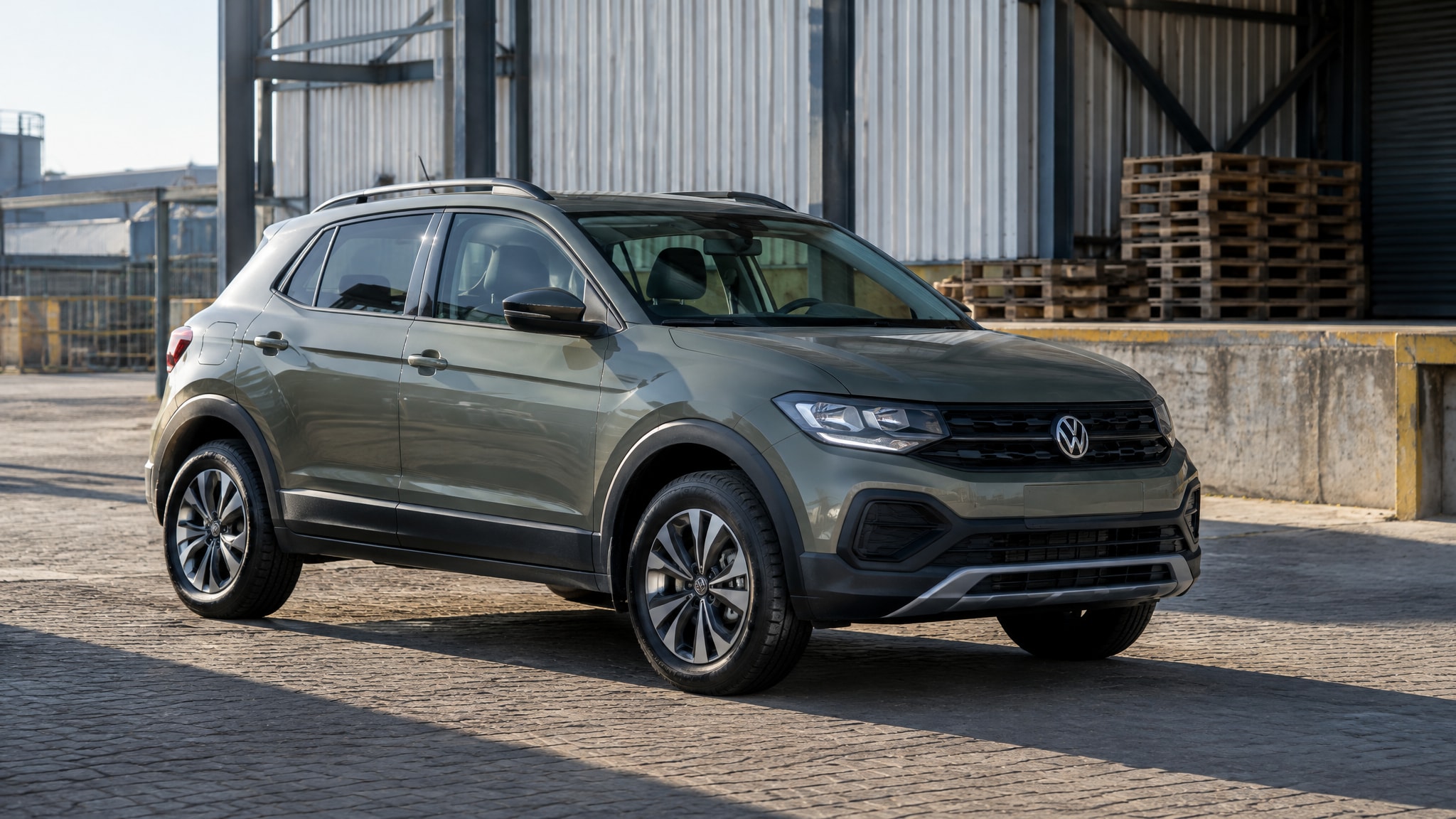
Every few years a new name appears in the entry-level SUV space and our phones start ringing. This time it is the VW Tengo in South Africa, a compact crossover that Volkswagen has now shown to the public, with local production starting around the end of 2026 and sales expected in 2027.
We sell vetted pre-owned vehicles, not new ones. Even so, many of the people who trust us with their next car are asking the same thing: is the Tengo worth waiting for? Here is what we know, what we don't, and how we would think about it if we were in your seat.
What the VW Tengo Is and Why It Matters for South Africa
The Tengo is Volkswagen's new compact SUV, a small crossover aimed at buyers who want a higher driving position and everyday practicality without stepping up to a bigger, costlier vehicle. It will be built in South Africa, and that single fact is what makes it more than another badge on a launch stage.
Local production matters because the entry-level SUV segment is where many South African families and first-time premium buyers begin. A model built here is designed with local roads, local conditions and local buying habits in mind, and a local plant tends to mean a closer relationship between the manufacturer, its dealers and its owners.
That is the promise, at least. How well it plays out depends on details Volkswagen has not yet shared.
Where it sits in the Volkswagen line-up
The Tengo is positioned below the T-Cross. If you know the current range, think of it as a step further down the SUV ladder: smaller and more accessible than the T-Cross, and aimed at the buyer who wants an SUV shape on a tighter budget.
We would not read more into that than Volkswagen has said. Positioning below the T-Cross tells you where the Tengo is meant to sit, but it does not tell you its size, its price or what it will offer as standard.
Built in South Africa, on Sale in 2027: Launch Timing and Local Production
Volkswagen unveiled the Tengo in Gqeberha, in the Eastern Cape, as part of celebrating 75 years in South Africa. Local production is due to start around the end of 2026, with sales from 2027, which makes this a car that the company is tying to its long history in the country rather than treating it as a one-off import.
Unveiled during VW's 75 years in South Africa
The setting tells you something. Volkswagen chose its anniversary, and the Eastern Cape, to introduce a model it wants South Africans to see as its own. For a brand that has built cars here for generations, a new entry-level SUV is both a commercial decision and a statement about the years ahead.
For you as a buyer, the unveiling is a signal of intent, not a showroom event. A first look at a vehicle is not the same as a vehicle you can drive away.
What 2027 means for buyers planning ahead
Today is November 2026, so the launch is close, but “2027” is a sales window, not a date you can put in your diary. Reports point to the second quarter, though Volkswagen hasn’t confirmed a showroom date.. Plants ramp up in stages, and early months are usually about getting the process right before volumes build.
Final specifications and pricing are for Volkswagen to announce. We won't guess at either, and we would be wary of anyone who does.
In practical terms, you have time. If your current car is serving you well, there is no rush to decide anything today. If it isn't, you may not want to hold your plans for a launch that has no showroom date yet.
VW Tengo vs Tera: The Key Differences
You may have read that the Tengo is "basically the Tera". That is half right, and the half that is missing matters.
The Tengo is closely related to VW Brazil’s Tera, and South Africa led its development, so it’s expected to differ in some details, though Volkswagen hasn’t spelled them out yet. We are not going to list differences we can't confirm, so here is the relationship in plain terms.
What the Brazilian Tera brings to the table
The Tera is Volkswagen Brazil's compact SUV. It gives the Tengo a proven starting point: a platform of ideas, proportions and engineering already developed for a similar kind of buyer in a market with comparable demands for affordability and everyday toughness.
Starting from an existing design also tends to shorten development. That is a sensible way for a manufacturer to bring a new entry-level model to market, and it is one reason the Tengo's 2027 timing looks realistic.
How the South African Tengo differs
A car sold here has to suit South African buyers, roads and regulations, and a model built here is not a straight copy of one built elsewhere. The press has pointed to differences, so treat the Tengo as its own product rather than a renamed Tera.
If you are comparing the two on paper, remember that what holds for the Tera will not automatically hold for the Tengo. Wait for Volkswagen's official specification before drawing conclusions on equipment, ride or finish.
Design and Technology: First Impressions of the Compact Crossover
Early coverage describes the Tengo as a tidy, well-proportioned compact crossover. It does not try to look bigger than it is, and that restraint suits the segment, where buyers want an SUV that fits a Centurion parking bay as easily as a Sandton basement.
The most talked-about styling detail is the slim front light signature. A narrow lighting treatment gives the nose a sharper, more modern look and sets it apart from the rounder faces of older small SUVs.
Volkswagen also positions the Tengo around "modern technology". That phrase is broad, and we will not fill it in for them. What we can say is that buyers in this segment now expect a sensible digital experience, so it is a promise worth watching when the full details arrive.
If you care about how a car looks on your driveway, these first impressions are encouraging. If you care about how it performs, rides and holds its value, they tell you very little yet.
Who the Tengo Is Likely to Suit, and How It Compares with a Used Alternative
On the information so far, the Tengo is likely to suit buyers who want a small SUV for daily use: commuters, young families, and people moving up from a hatchback who like a higher seating position. It is not aimed at those who need a load-carrying bakkie, serious towing ability or a performance car, and it is not a replacement for the executive or premium vehicles that many of our customers drive.
Tengo vs a nearly-new Polo or T-Cross-type buyer
If you are weighing a Tengo against a nearly-new Polo or a T-Cross-type SUV, you are really asking what you value most. A new model offers the newest design and a full factory story. A nearly-new vehicle offers something already on the road, with a history you can check and an inspection report you can read.
We have looked at this trade-off before in our Polo comparison, which is a useful read if a small, sensible Volkswagen is on your list. For the bigger question of buying new-ish against used, demo versus used car covers the main points.
New-model wait vs buying something proven today
Here is how we weigh it, based on 28+ years of combined motor industry experience and the Autoshed Approved inspection process behind every vehicle we sell:
- Availability: A vetted used car can be yours this month. The Tengo cannot, and its launch window is still "from 2027".
- Known quantity: A used model has years of owner experience behind it. A first-year model does not.
- Pricing: Tengo pricing has not been announced, so any comparison today rests on guesswork.
- Newness: Only the Tengo offers a brand-new design and a full warranty-and-service story from day one.
Our advisors can also share how first-year models are typically received in the South African market, and what that tends to mean for resale value. It is an experienced-dealer view, and it is part of why many buyers choose to let a new model settle before they commit.
None of this makes the Tengo a poor choice. It simply means the wait has a cost, and you should decide whether it is worth paying.
Budgeting and Finance Ahead of a New-Model Launch
Pricing will arrive later than the excitement does, so the smartest move is to get your own numbers in order first. That way, when Volkswagen announces the figures, you are reacting from a position of readiness rather than guessing at what you can afford.
Preparation costs nothing, and it is useful whichever car you end up buying.
Deposit, approval and running costs to plan for
Start with the deposit. A larger one generally lowers the amount you need to finance, and it can strengthen your application, so it is worth deciding early how much you are comfortable putting down. How much deposit you may need is a good place to see the thinking.
Next, understand the approval process before you need it. Lenders look at your income, your obligations and your credit record, and it is far easier to tidy up an old account now than in the week you want to sign. Our guide to how vehicle finance approval works walks through what to expect.
Then build a monthly running-cost budget. The instalment is only part of the picture, because insurance, fuel, servicing, tyres and licensing all add up, and a small SUV is no exception. We have set out what a car really costs to run each month if you want a framework to work from.
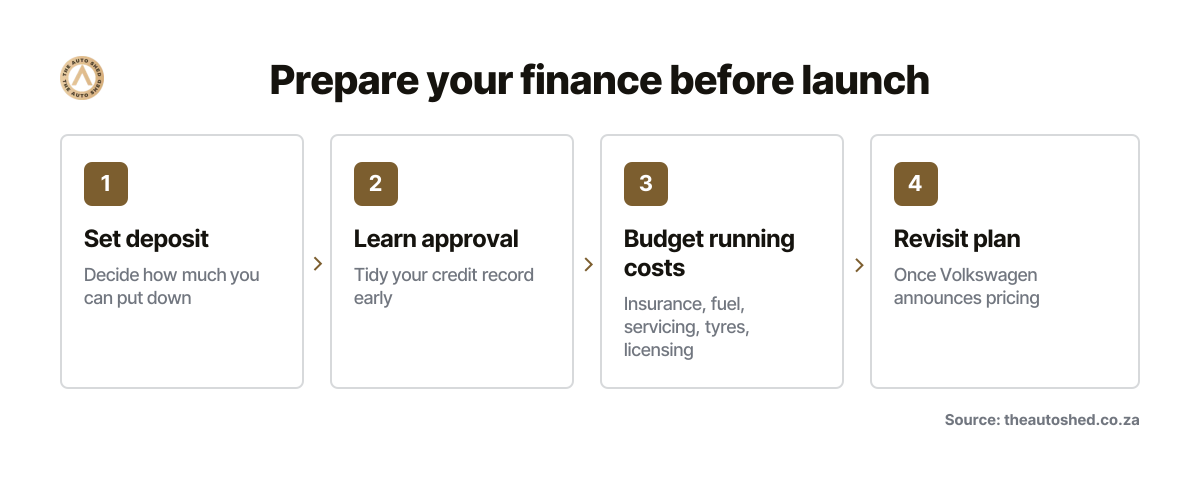
In order, we would suggest:
- Decide your deposit.
- Learn how approval works and tidy your credit record.
- Draw up a full monthly running-cost budget.
- Revisit your plan once Volkswagen announces pricing.
We should be plain about one limit. Preparing your finance does not tell you what the Tengo will cost, and it does not guarantee approval for any particular vehicle. It simply puts you in control of the conversation when the facts arrive.
Our Take: Buying Smart While the Tengo Is Still Coming
We like the look of the Tengo, and we are glad to see a locally built entry-level SUV on the way. Local production is good news for South Africa.
Still, new models take time to prove themselves. The first owners find the quirks, the market works out where the model sits, and resale values settle. A well-inspected used vehicle gives you a head start on all of that, because its story has already been told.
Our rule is simple: if a vehicle isn't good enough for our family, it isn't good enough for yours. Every car we sell goes through the Autoshed Approved inspection process, and more than 70% of our business comes from repeat customers and referrals. That only happens when people are looked after properly.
If you would rather not wait for 2027, you are welcome to browse our current stock or talk to our team. We can arrange financing, trade-ins and nationwide delivery, and we are happy to give you an honest view on whether now is the right time for you.
Frequently asked questions
When will the VW Tengo be available in South Africa?
Local production starts around the end of 2026, and sales are expected in 2027, reportedly from the second quarter. Volkswagen hasn’t announced an exact on-sale date.
Is the VW Tengo the same as the VW Tera?
No. The Tengo is based on VW Brazil's Tera, but the motoring press has noted key differences between the two. Wait for Volkswagen's official South African specification before assuming anything carries over.
Where does the Tengo sit in the Volkswagen range?
It is positioned below the T-Cross as a compact SUV. That makes it the more accessible option, though size, equipment and price are still to be confirmed.
How much will the VW Tengo cost?
Volkswagen has not announced pricing, and we would not guess. You can prepare in the meantime by settling your deposit, understanding finance approval and budgeting your monthly running costs.
Should I wait for the Tengo or buy a used SUV now?
If your current car serves you well and you want the newest design, waiting is reasonable. If you need a vehicle now, a vetted used SUV or nearly-new Polo gives you a known track record today, without relying on launch dates and pricing that are still unconfirmed.