
Fuel is one of the few running costs you can change from the driver's seat. You don't need a new car, a gadget or a special fuel to spend less at the pump. You need a handful of habits and a vehicle that is in good order.
We've spent 28+ years in the motor industry, and more than 70% of our business comes from repeat customers and referrals. Those customers tell us the same thing: they care about what a car costs to run as much as what it costs to buy. So here is how to save fuel, starting with the changes that cost nothing and ending with the choice of vehicle itself.
How to Save Fuel Starts With the Way You Drive
Driving style is the biggest lever you have, and it is free. The same car, on the same route, can use noticeably more or less fuel depending on who is behind the wheel. We won't put a percentage on it, because it varies with the vehicle and the road, but any driver who has tried it will tell you the difference shows up on the fuel gauge.
Smooth acceleration, early braking and reading the road
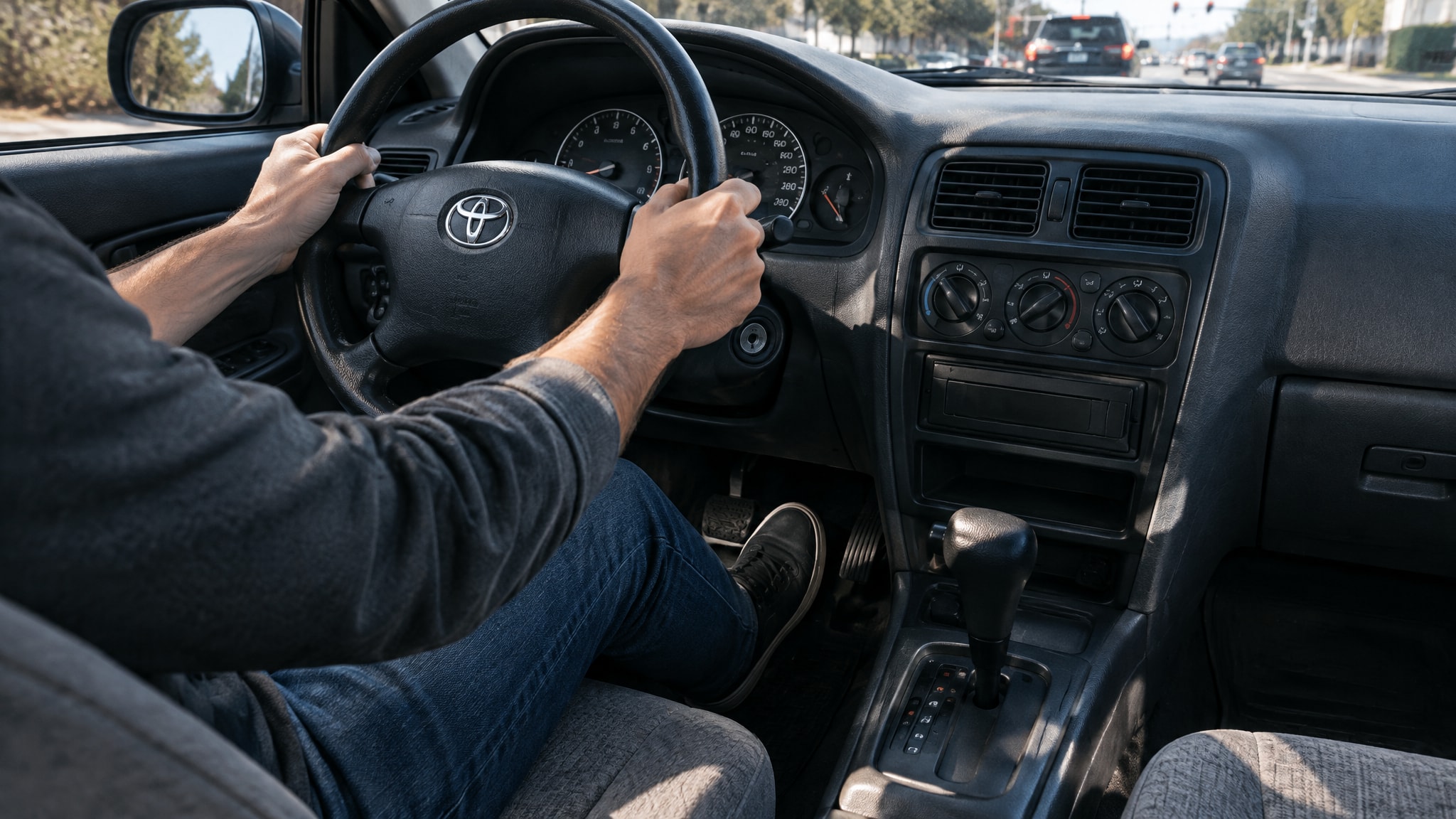
Every time you brake hard, you throw away the energy you just burned fuel to build. The fix is to look further ahead. If you see a red robot, a slowing queue or a speed bump, ease off the throttle early and let the car roll instead of racing up and braking at the last moment.
Gentle throttle matters just as much. Pulling away briskly from every stop uses more fuel than building speed progressively, and it wears tyres and brakes faster too.
In practice, that comes down to three habits:
- Look well ahead, not just at the bumper in front of you.
- Lift off early and coast towards stops.
- Squeeze the accelerator rather than stamping on it.
Steady speeds and choosing the right gear
Wind resistance rises sharply as speed climbs, so a car that sips fuel at 100 km/h can drink noticeably more at 130 km/h. On a long highway run, such as Centurion to Durban or Cape Town, a slightly lower cruising speed is one of the simplest ways to stretch a tank, and it also gives you more time to react.
Gear choice works the same way. Change up early enough that the engine isn't revving hard, but don't hold a high gear so long that the engine labours and shudders. That is called lugging, and it strains the engine without saving anything. If the car struggles, drop a gear.
Cruise control helps on flat, open roads because it holds a steady speed for you. On hilly stretches, it can work harder than a thoughtful driver would.
Maintenance That Quietly Cuts Your Fuel Bill
A car that is tired or neglected burns more fuel to do the same job, and you rarely notice the change because it creeps in. These are the same checks we run on every vehicle before it earns our badge. Our Autoshed Approved inspection covers the fuel-economy-relevant basics on every vehicle: tyres, service history, filters and battery condition, drawing on 28+ years of combined motor industry experience.
Tyre pressure, alignment and wheel condition
Under-inflated tyres are the most common culprit. A soft tyre has a larger contact patch, which increases rolling resistance, so the engine works harder just to keep the car moving.
Check pressures when the tyres are cold, using the figures on the sticker in the door frame or in the owner's manual. Do it at least once a month, and again before a long trip or when you're carrying a full load.
Alignment and wheel condition count too. If the car pulls to one side, or the tyres wear unevenly on the inside or outside edge, the wheels are fighting each other. A bent rim or a worn tyre has the same effect, so get it looked at rather than waiting for the next service.
Servicing, oil, air filters and spark plugs
Fresh oil of the correct grade reduces internal friction. A clogged air filter restricts the engine's breathing, and worn spark plugs on a petrol engine can cause incomplete combustion. None of these is dramatic on its own, but together they add up at the pump.
Electrical health matters as well. A weak battery makes the alternator work harder, and a faulty oxygen or air-flow sensor can feed the engine's computer bad information so it runs too rich. If you are unsure about yours, learn the warning signs of a weak battery before it leaves you stranded. A dashboard warning light is also worth taking seriously, because it often points to something that is costing you fuel.
Servicing will not turn a thirsty engine into an economical one. It restores the efficiency the car was built with, and that is all.
Cut Weight, Drag and Idling
The engine has to move everything you put in or on the car. Anything that adds weight, catches the wind or keeps the engine running while you go nowhere costs you money.
Roof racks, roof boxes and unnecessary load
Removing an unused roof box or bike rack, and correcting tyre pressure, are two free fixes that reduce drag and rolling resistance. A roof box that stays on all year after the holiday is a common and costly habit, because it spoils the airflow over the whole car, especially at highway speed.
The boot deserves the same honesty. Tools, sports gear and boxes you meant to drop off months ago are all passengers you are paying to carry. Clear it out, and keep only what you actually use.
Bakkie owners can do the same with the load bin. A canopy or load-bin accessories you don't need for the week ahead are worth taking off.
Idling, aircon use and windows
An idling engine does zero kilometres to the litre. If you're going to be stationary for more than a short moment, such as waiting outside a school or a shop, switch it off. Modern cars restart easily, so there is little reason to keep it running.
The aircon question has no single answer. At lower speeds around town, open windows cost very little, so use them. At highway speed, open windows create drag that can cost more than the compressor does, so closing them and running the aircon is often the better trade.
That is a judgement call rather than a rule, and your own car and route will settle it. Whichever you choose, keeping your aircon in good working order means it won't be working harder than it should.
Plan Your Trips and Use the Car Less
The cheapest litre is the one you never burn. A cold engine uses more fuel than a warm one, so several short trips cost more than one longer loop that covers the same stops, because the engine never reaches its efficient temperature.
Combining errands and avoiding peak traffic
Group your errands into one trip where you can, and do the farthest stop first so the engine is warm for the rest. If a shop is a short walk away, walk. You'll save fuel and probably time as well.
Timing matters on Gauteng roads. Stop-start traffic on the N1 or R21 at rush hour is about the worst condition for consumption, because you keep accelerating and braking without covering ground. Leaving 30 minutes earlier or later, or working from home one day a week if your job allows, can make a real difference to both the fuel gauge and your stress levels.
Fuel-smart habits at the pump
Premium fuel is not an automatic upgrade. Your owner's manual states the minimum octane rating your engine needs, and following it is what counts. If the manufacturer asks for the higher grade, use it. If it doesn't, paying extra rarely brings a saving that covers the higher price.
Shop around for price, too, but only when the detour is small. Driving across town to save a few cents a litre can cost you more than you gain.
Lastly, don't top up past the automatic click-off. Spilled fuel is wasted fuel, and it can damage the vapour recovery system in some cars.
Does the Car You Choose Save Fuel? Petrol, Diesel, Hybrid and Size
Everything above helps, but the vehicle itself sets the baseline. A large, heavy SUV will use more fuel than a compact hatchback however carefully it's driven, and no driving technique closes that gap entirely.
Matching engine and body type to how you really drive
From a dealer's perspective, right-sizing is the biggest long-term saving. We see it constantly: a buyer who drives a modest annual distance in town ends up with a large engine they rarely stretch, while a high-mileage commuter picks the thirstiest option because the monthly instalment looked attractive.
Our advice is to match engine size and fuel type to your real annual mileage. Petrol, diesel and hybrid each suit a different pattern of use. Diesel tends to reward long-distance and towing, while hybrids are strongest in stop-start traffic. If you want the detail, we look at whether a hybrid or diesel actually saves money in a separate piece.
This is not an argument for always buying small. If you tow, carry a family or load a bakkie for work, a bigger vehicle is the right tool, and the aim is simply not to buy more than you need.
What a used premium vehicle costs to fuel
A well-chosen used premium vehicle does not have to be expensive to fuel. Much depends on engine choice and condition, which is why we check the fuel-relevant items on every car. Fuel is only one line in the monthly picture, so it helps to see what a car really costs to run each month, including insurance, servicing and tyres.
If you'd like to talk it through, browse our current stock or ask our team what suits your mileage. We would rather you leave with the right car than the biggest one.
Track Your Consumption and Know Your Numbers
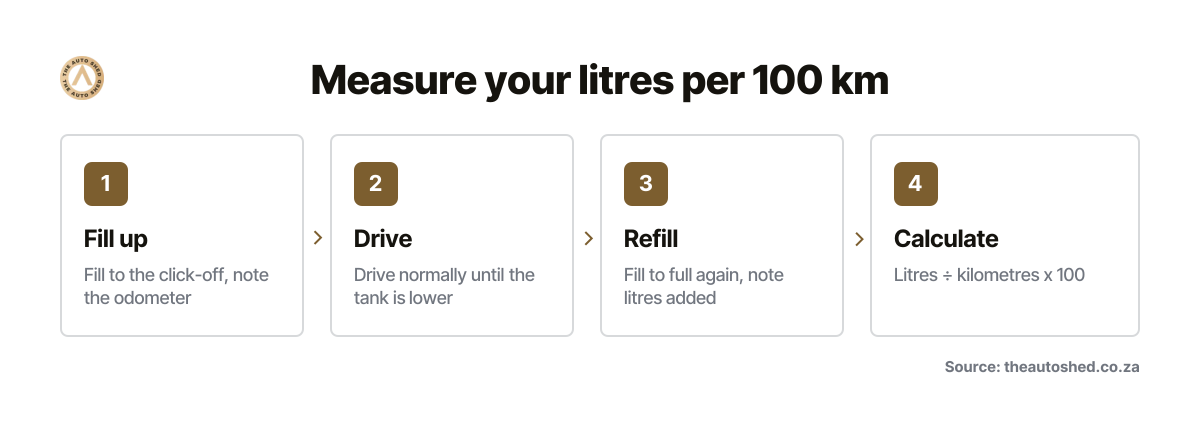
You can't tell whether a change is working by feel. The only reliable way is to measure litres per 100 km before and after, and the method takes five minutes of effort spread over a week or two.
Here is how it works:
- Fill the tank until the pump clicks off, and note the odometer reading.
- Drive normally until the tank is a good deal lower.
- Fill to full again at the same pump if possible, and note how many litres went in.
- Divide the litres added by the kilometres driven, then multiply by 100.
In a typical case, you add 42 litres after driving 560 km. Divide 42 by 560 and you get 0.075. Multiply by 100 and your consumption is 7.5 litres per 100 km.
One reading can mislead, so repeat it over a few tankfuls. Change one habit at a time, such as tyre pressure or highway speed, and compare. A lower figure means it's working. If you'd like to put rand values on it, you can calculate your fuel expenses from the same numbers.
Prices at the pump move, and the recent petrol price relief news is welcome, but it won't last forever. Lower consumption stays with you whatever the price does.
Common Fuel-Saving Myths and Questions
Fuel tips spread quickly on social media and WhatsApp, and many don't survive a closer look. Here are the ones we hear most.
Is there a petrol shortage, and does the 30-minute rule apply?
Earlier in 2026, some stations ran dry when panic buying hit ahead of a big price increase, but government has maintained that national supply is adequate. Panic buying is what caused those empty pumps, so rely on official announcements rather than forwarded messages, and fill up as normal.
The so-called 30-minute rule says you should never let the tank drop below about 30 minutes of driving. It isn’t an official standard, but it’s a sensible prompt to refuel before you run low. Fill up when you need to, and use the price comparisons above if you want to save.
Which gadgets and tricks are not worth your money
Be wary of fuel additives, magnets that clip onto fuel lines and devices that plug into the cigarette lighter. We haven't seen evidence that they deliver a saving worth paying for, and some can do harm. Spend that money on a proper service and a tyre check instead.
If you want lower running costs and don't know where to begin, speak to us. We'll tell you honestly what we'd do in your position, and if the answer is that your current car is fine, we'll say so. Every vehicle we sell has to pass our own inspection, because if it isn't good enough for our family, it isn't good enough for yours.
Frequently asked questions
What is the best way to save on fuel?
Change how you drive first, because it costs nothing and has the biggest effect. Look ahead, accelerate gently and keep a steady highway speed. After that, keep your tyres at the correct pressure and take off any roof box or rack you aren't using.
Is there a petrol shortage in South Africa right now?
Some stations ran dry during panic buying earlier in 2026, but government says national supply is adequate. If supply changes, official announcements are the source to trust, not forwarded messages. Filling up early rarely saves money, so fill up when you need to.
What is the 30-minute petrol rule?
It’s a rule of thumb that you should refuel before you have less than about 30 minutes of driving left. It isn’t official, but it’s a useful reminder to fill up before you run low.
Does cruise control save fuel?
On flat, open roads, yes, because it holds a steady speed more smoothly than most drivers can. On hilly roads, it can push the engine harder than a driver who eases off on the climbs. Use your judgement for the terrain.
How often should I check my tyre pressure?
At least once a month, and before a long trip or when you're carrying a heavy load. Check when the tyres are cold, and use the pressures on the door-frame sticker or in the owner's manual.